City Limits rounds up the latest housing and land use-related events, public hearings and upcoming affordable housing lotteries that are ending soon.
Adi Talwar
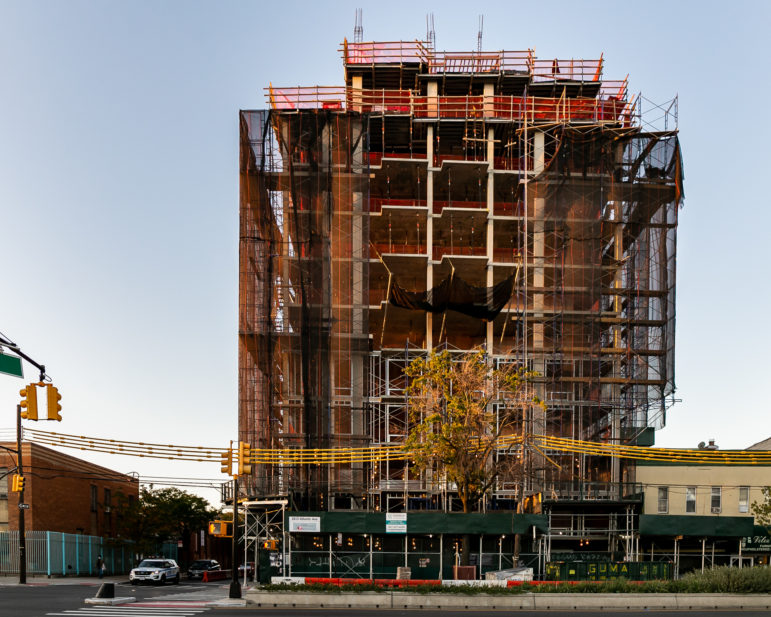
Construction at 2815 Atlantic Ave., Brooklyn, in November 2021.
Welcome to City Limits’ NYC Housing Calendar, a weekly feature where we round up the latest housing and land use-related events and hearings, as well as upcoming affordable housing lotteries that are ending soon. If you know of an event we should include in next week’s calendar, email david@citylimits.org.
To get more resources like this as well as our latest reporting on local housing issues, sign up for City Limits’ Mapping the Future newsletter here.
Upcoming Housing and Land Use-Related Events:
Tuesday, Jan. 3 at 1 p.m.: The NYC Planning Commission will hold a review meeting; the agenda has not yet been posted. More info and the livestream link here.
Tuesday, Jan. 3 at 9:30 a.m.: The Midtown South Community Council will hold a discussion on health, homelessness and housing featuring author Wendell Potter. More here.
Wednesday, Jan. 4 at 10 a.m.: The NYC Planning Commission will hold a public meeting to discuss land-use projects in Manhattan and Brooklyn. More info and the livestream link here.
NYC Affordable Housing Lotteries Ending Soon
The New York City Department of Housing Preservation and Development (HPD) are closing lotteries on the following subsidized buildings over the next week:
Opinion: New York’s Housing Plans Must Address Affordability—& Climate Change
“New York State has the lowest per capita emissions in the country. Compared to the rest of the United States, New York City has by far the best transit, and it is the only city where living car-free is the standard. Other cities should pursue more climate-friendly urban design, but New York City should lead by welcoming more people.”
Adi Talwar
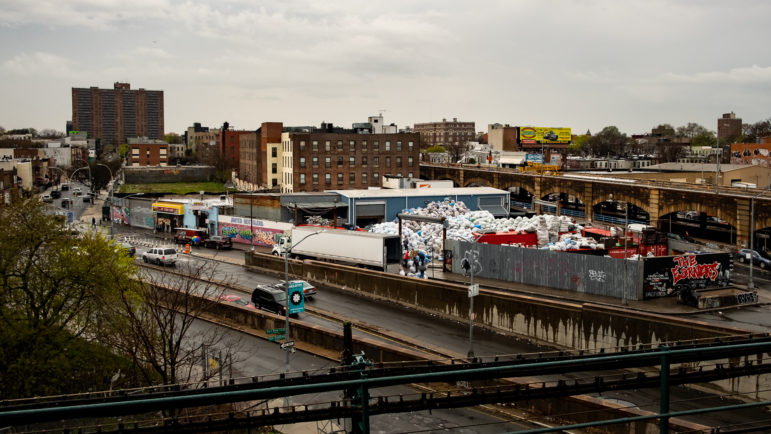
The intersection of Atlantic and East new York avenues, pictured here in 2019. City officials have been eyeing for years for potential economic and real estate development.
New York City desperately needs to address its severe housing crisis. Plans to do so have been released by Mayor Eric Adams and City Council Speaker Adrienne Adams, with Gov. Kathy Hochul expected to soon follow suit. These plans are primarily targeted at affordability. However, climate change should also be front-and-center. Ambitious, well-designed housing plans can provide major benefits for both affordability and climate change while also making the New York City metropolitan area a safer, more pleasant place to live.
New York City’s affordability problem is acute. Thanks to the stratospheric cost of housing, New York was recently tied with Singapore for most expensive city in the world. It is the first time New York City has ever achieved this dubious distinction.
The root of the problem is a massive housing shortage. For decades, New York City zoning laws have restricted new construction. That wasn’t a problem in the 1970s, when the city was losing population. However, the population has grown every decade since the 1980s and now has one million more people than its prior postwar peak. The affordability crisis is a matter of basic economics: the housing supply doesn’t meet the demand, so prices go up.
Public policy is currently restricting the local housing supply. There is a strong moral argument that policy should instead push the housing supply in the opposite direction. The reason for this is climate change.
Climate change is a quintessential example of a market failure. When people emit greenhouse gas, they exacerbate climate change, causing harms around the world. Heat waves in New York City, flooding in Pakistan, extreme weather across Africa and China—all of this and more is worsened by climate change. As the planet heats up, the harms become increasingly catastrophic. Those who cause the emissions are generally not required to pay for the harms; that is the market failure. It creates a moral responsibility for those who are able to reduce emissions.
Housing is one of the most important ways to reduce emissions. (Other important ways include clean energy, plant-based diets, and avoiding plane flights.) Small apartments require less energy than large, detached single-family houses. High population density also facilitates efficient transportation with walking, biking, and transit instead of private automobiles.
New York State has the lowest per capita emissions out of any state in the country. Compared to the rest of the United States, New York City has by far the best transit, and it is the only city where living car-free is the standard. Other cities should pursue more climate-friendly urban design, but New York City should lead by welcoming more people.
The housing shortage makes it a luxury to live in New York City. However, because of climate change, it should be a luxury to not live in New York City. It should be more expensive to live in car-centric sprawl than it is to live in one of the the most energy-efficient cities in the country.
It is difficult to put an upper limit on how much housing should be built in the New York City metro area. Mayor Eric Adams’ plan calls for 500,000 new units over the next 10 years. Adams calls this a “moonshot goal,” but it’s probably much too small.
For perspective, New York City added 630,000 people during the 2010s despite the severely constrained housing market. Meanwhile, the U.S. population is projected to grow about the same over the next decade as it did over the previous. The dual goals of affordability and climate change mean that New York City should plan for significantly more population growth in the upcoming decade. So too should the rest of the metropolitan area, especially Long Island, the lower Hudson valley, and southwestern Connecticut, all of which have been especially derelict in housing construction.
One might object that there isn’t enough space for so many people. That’s incorrect. There’s plenty of space; it’s just not being used well. Plans should focus on increasing density, especially near transit. Thanks to the rise of work-from-home, transit lines are currently running well below their pre-pandemic peaks. The cash-strapped transit agencies need new riders.
To ensure adequate open space for all residents, public street space should be reclaimed from private automobiles and used for local communities. The popular Open Streets program should be expanded. Planners should also study global best practices, such as Barcelona’s Superblocks. New York City should commit to ending the scourge of car culture, which inhibits people from imagining better uses of public streets.
Changes to public street design should accompany bold housing plans to build a cleaner, safer, more pleasant, and more affordable New York City metropolitan area. A better city is possible, if only there is the ambition to build it.
Baum is executive director of the Global Catastrophic Risk Institute.
As 2022 comes to a close, City Limits looks back at images that defined some of New York City’s biggest news stories and most pressing policy issues. Below are some of our favorite photos published this year.
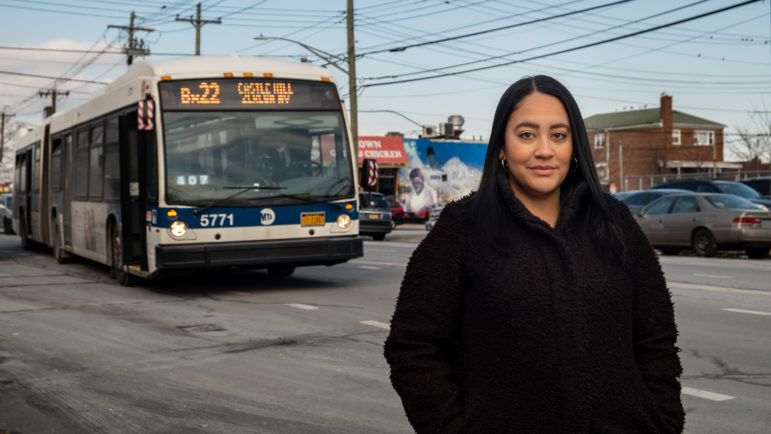
Following the 2021 elections, New York welcomed a new mayor and an almost entirely new City Council in January, its most racially diverse cohort of lawmakers ever and the first time the legislative body has been majority women. Below, a shot of new Councilmember Amanda Farías on Castle Hill Avenue in her Bronx district.
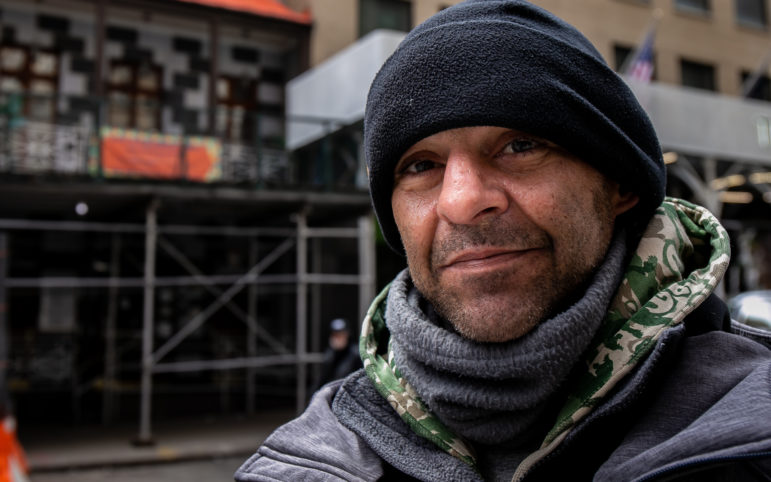
Michael Torres, pictured below, told City Limits in March that he’d recently accepted a bed in such a shelter after more than a year sleeping in parked cars and parks. “I don’t need a curfew,” he said at the time. “I just need to eat a bowl of oatmeal and go out looking for work.”
Adi Talwar
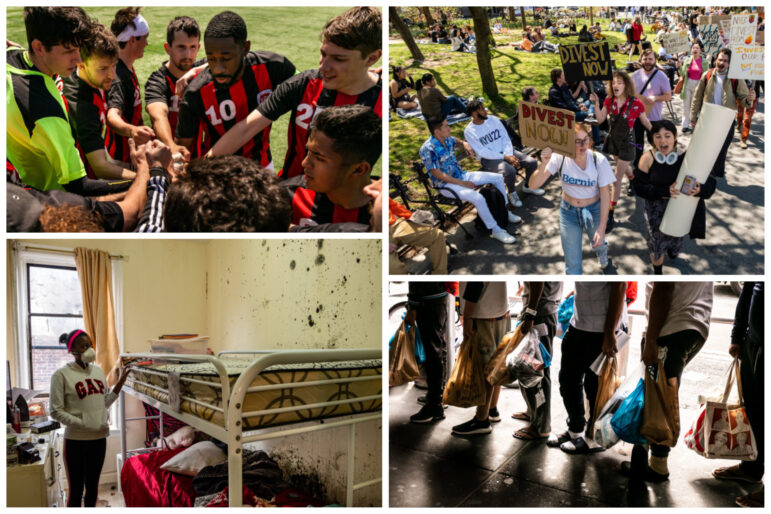
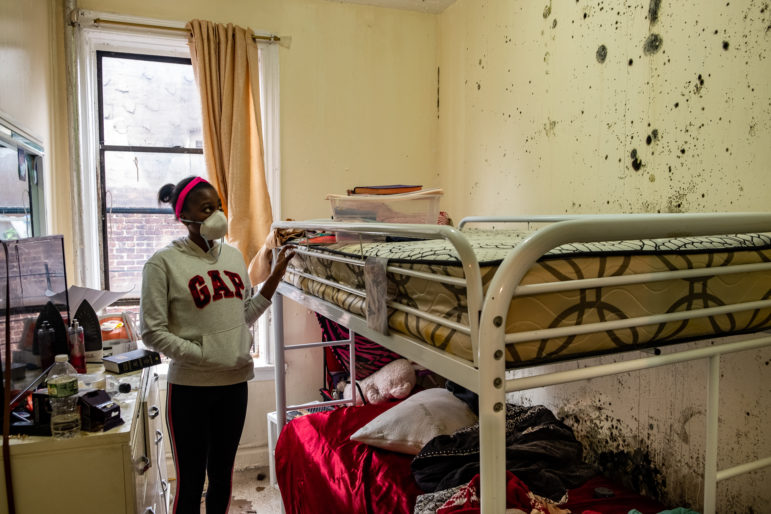
Nicholle Nichols in her Washington Heights apartment, where she had been trying for months to get the landlord to fix a persistent mold problem. Tenant attorneys, advocates and policymakers say the delays that Nichols encountered demonstrate the flaws of the city’s code enforcement program, and the limits of a housing court system that can move at a glacial pace when it comes to holding owners accountable for unsafe conditions.
Adi Talwar
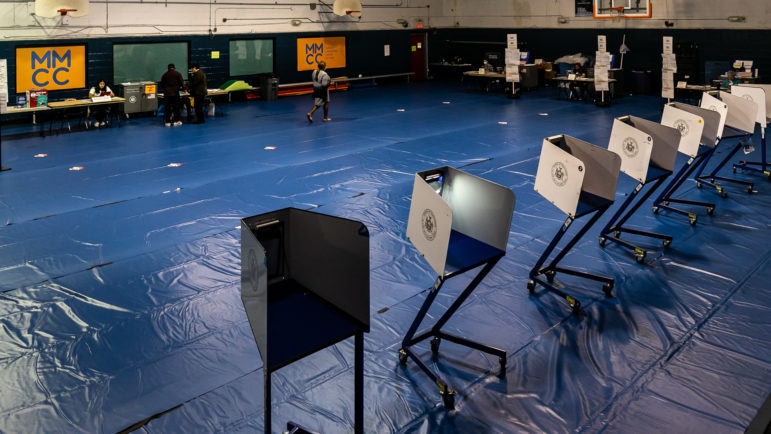
An empty polling site in The Bronx during the primary election in June, the first of two primaries held in New York state this year during a chaotic election season. Races for Congress, State Senate and Assembly were complicated by a legal battle over redistricting that threw in a wrench in many candidates’ campaign plans.
After two pandemic years that wrought havoc on all education but particularly on arts classes, advocates and educators have mounted a drive to win more—and more permanent—funding for visual art, music, dance and theater in the city’s schools. Below, images of music, dance and art classes held this year Bronx Community Charter School.
The Ukrainian Sports Club was founded in 1947 as tens of thousand of Ukrainian migrants settled in New York. Today, the team—pictured below at a match in Brooklyn’s McCarren Park in late April—competes in the historic Cosmopolitan Soccer League and continues to serve a special function for generations of immigrants, particularly this year after Russian’s invasion of Ukraine. “We are not in Ukraine and we can’t take up weapons and defend our country, but we can contribute humanitarian aid, contribute to our families there,” one team member told City Limits.
Adi Talwar
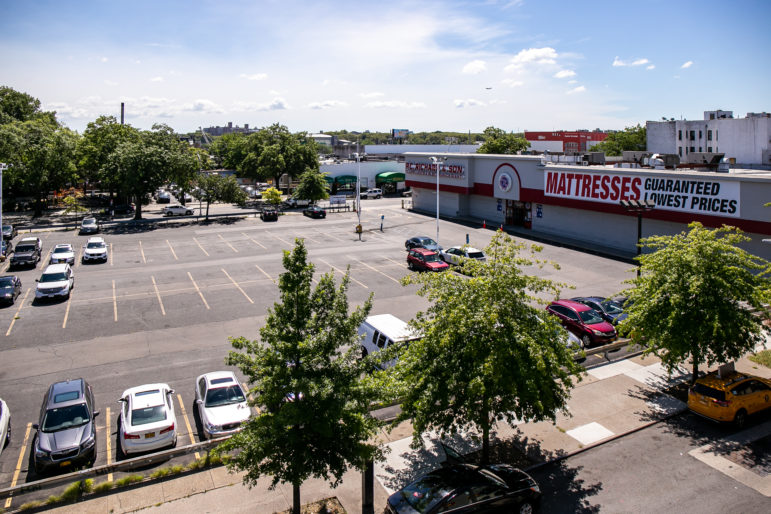
This year saw several heated debates over land use proposals across the five boroughs, as the city looks to create more housing to keep up with demand while heeding residents’ concerns over affordability neighborhood character. The City Council in 2022 approved upzonings from private developers—including plans to build new apartments for sites in Astoria (below) and Throggs Neck—as well as a city-initiated rezoning in the Rockaways. Mayor Eric Adams has also proposed neighborhood-level rezonings near future Metro-North stations in the East Bronx and along an Atlantic Avenue light manufacturing corridor in Crown Heights and Bedford-Stuyvesant.
Adi Talwar
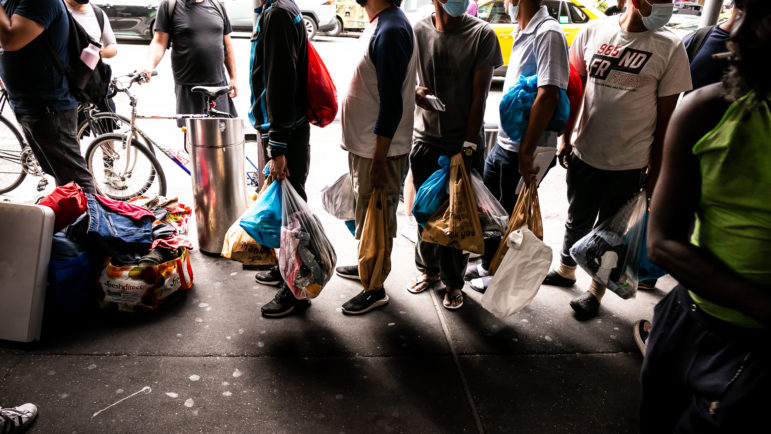
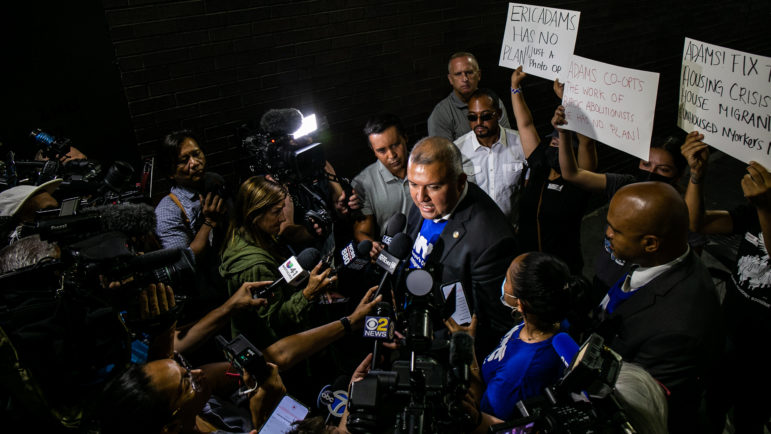
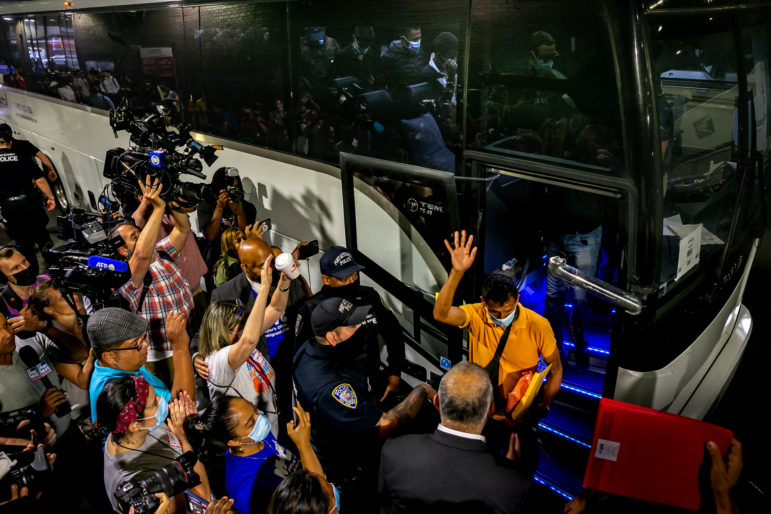
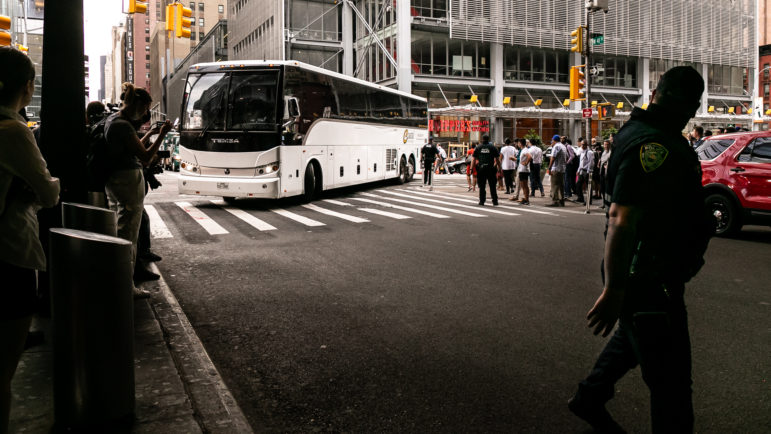
Starting in the spring, New York City saw an influx of migrants and asylum seekers from Latin America, many of whom were bused here by Republican governors in southern border states as part of a political stunt. Thousands have entered the city’s shelter system, prompting Mayor Eric Adams to declare a state of emergency. The series of images below captures the scene as one of three buses of asylum seekers from Texas arrived at the Port Authority bus terminal on Aug. 10. “I need to find a job,” Jose Rodriguez, who was staying in a Brooklyn homeless shelter this summer after arriving from Venezuela, told City Limits in Spanish. “My family is in Colombia and waiting for help.”
Immigrants who arrived in New York City on one of the three buses from Texas on Aug. 10, waiting in front of Port Authority to be transported to homeless shelters.
NYC Mayor’s Office of Immigrant Affairs Commissioner Manuel Castro addressing the press at Port Authority in Midtown Manhattan.
First person disembarking the first of three buses that arrived from Texas at Port Authority in Midtown Manhattan on Aug. 10, 2022.
The first of three buses from the Texas border arriving at Port Authority in Midtown Manhattan on Aug. 10.
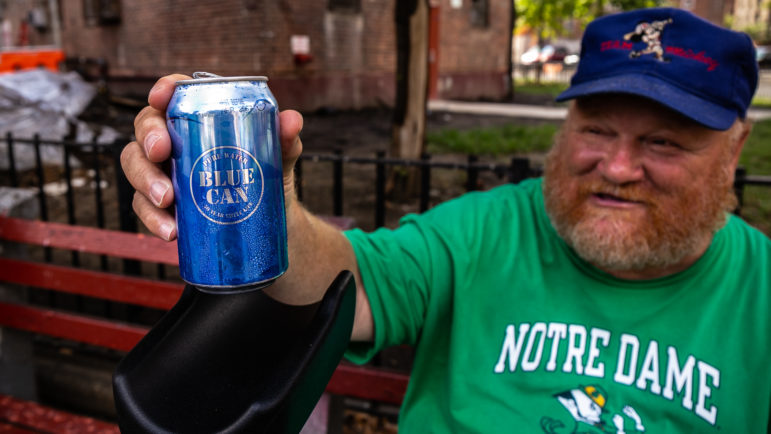
Mando Martinez, a lifelong resident of the Jacob Riis Houses, holds a can of water provided by the city after NYCHA warned tenants at the development not to drink or cook with their tap water after it tested positive for arsenic in September. The incident turned out to be a false alarm, what officials blamed on a laboratory subcontractor that inadvertently introduced arsenic into the sample, but reignited tensions and distrust between NYCHA tenants and management.
Adi Talwar
Below, a worker at Encore Community Services’ Senior Center packs meals for home delivery. This year, both the city and state budgets included funding for Cost-of-Living-Adjustments (COLA) to boost the wages for human service workers at nonprofits under contract to provide support and essential services to New Yorkers. Even with the pay bump, many nonprofit workers say their low wages make it difficult to justify staying in the sector in the face of increased costs of living and demand spurred by the pandemic.
Adi Talwar
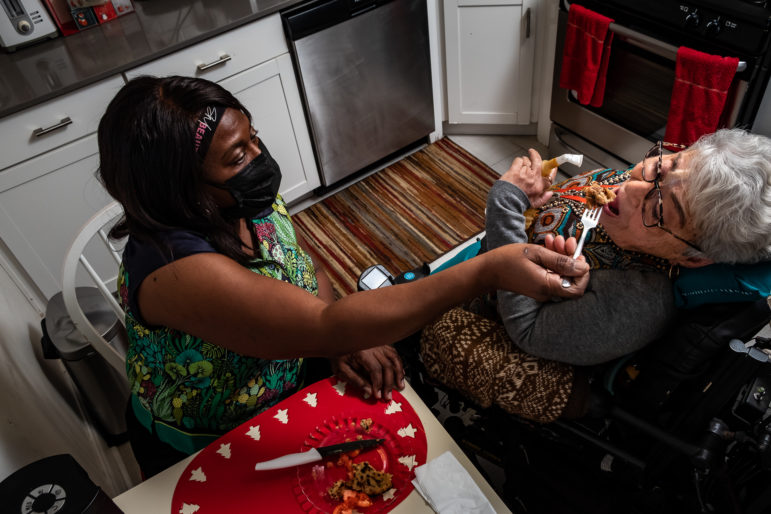
L., who asked to go by her first initial to protect her identity, spoke to City Limits this fall while she was staying at a domestic violence shelter with her son and searching for an apartment to move into after. State law caps stays in domestic violence shelters at 180 days, forcing thousands of families in recent years to enter the city’s crowded homeless shelter system when their time runs out.
Adi Talwar
“The transfer has destroyed us,” said a mother whose son, in immigration detention in New York for the last two years, was abruptly transferred from the Orange County Jail upstate to a facility in Mississippi this summer. He was one of dozens of detainees moved from the jail to other ICE facilities without notice, prompting intense criticism from advocates and immigrant families, who have called for New York State to cease contracting with ICE.
Adi Talwar
In October, Mayor Eric Adams announced the city would be opening a “Humanitarian Emergency Response and Relief Center” or HERRC to accommodate the thousands of asylum seekers who’ve arrived in the city in recent months. But the tent facility on Randall’s Island closed less than a month after it opened, following sparse use and intense criticism from advocates who criticized the lodgings as lacking privacy and adequate shelter from the elements. But facing another uptick in the homeless shelter population, city officials said this month that they might revive the model.
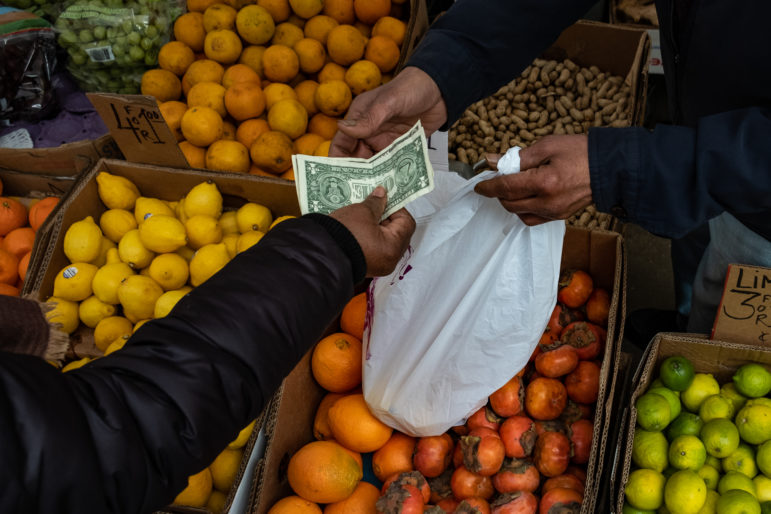
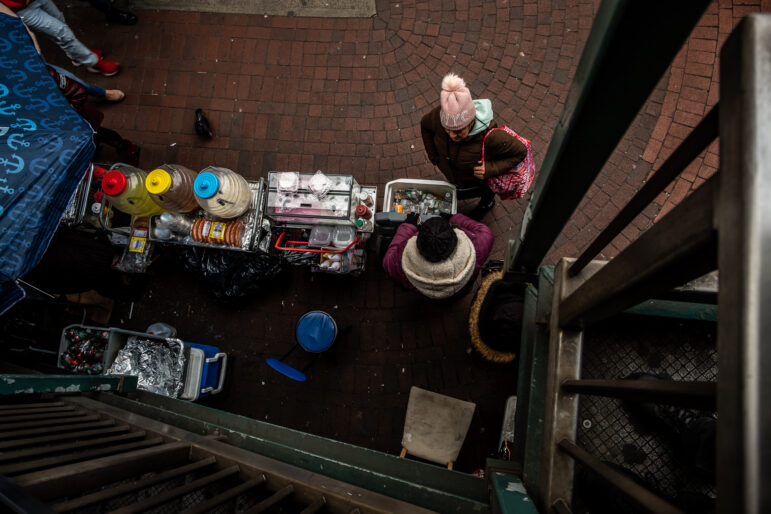
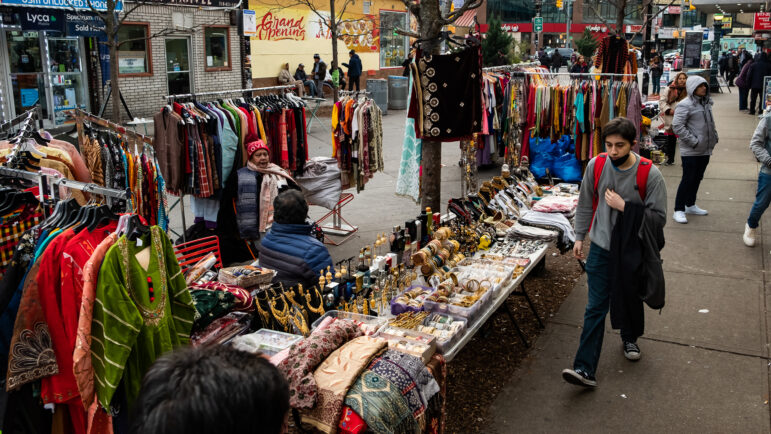
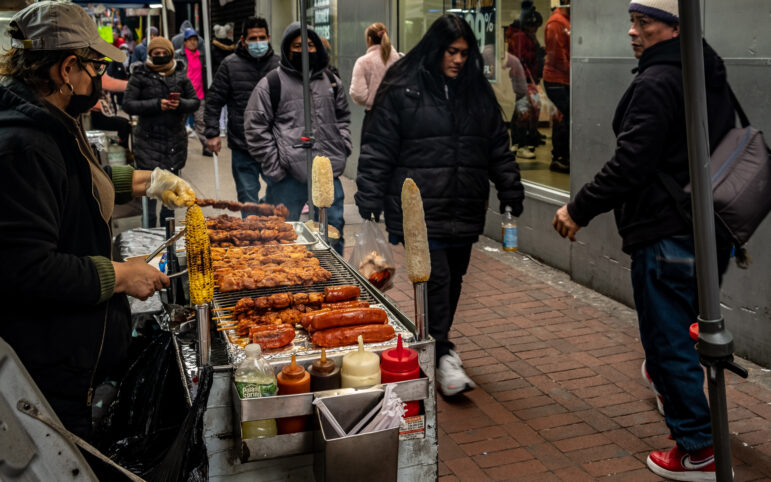
This year, the NYPD has been the leading enforcement agency against street vendors, breaking from an earlier pledge to take them out of the process as part of reforms announced by former Mayor Bill de Blasio. Police issued more tickets to vendors in 2022 by November than the Department of Consumer and Worker Protection (DCWP), a City Limits’ data analysis found, despite the fact that DCWP was put in charge of vendor enforcement last year after passage of the City Council’s street vendor reform law.
Vendors in Jackson Heights, Queens, saw the most enforcement this year by the city’s Department of Consumer and Worker Protection (DCWP), along with several other neighborhoods home to large immigrant populations.
A vendor in Jackson Heights, Queens.
A food vendor in Queens cooks up pupusas.
Street vendors near Roosevelt Avenue in Jackson Heights, Queens.
A street vendor on Roosevelt Avenue in Jackson Heights, Queens, the zip code that saw the most enforcement this year by the city’s Department of Consumer and Worker Protection (DCWP).
NYC’s Floundering ‘Right to Counsel’ Fails to Keep Pace With Eviction Cases
The city’s trailblazing program guaranteeing legal representation to the city’s poorest tenants facing eviction has been falling short since the state eviction moratorium was lifted last year; many still face housing court alone.State officials told City Limits the program has declined more than10,000 casessince March 2022.
Adi Talwar
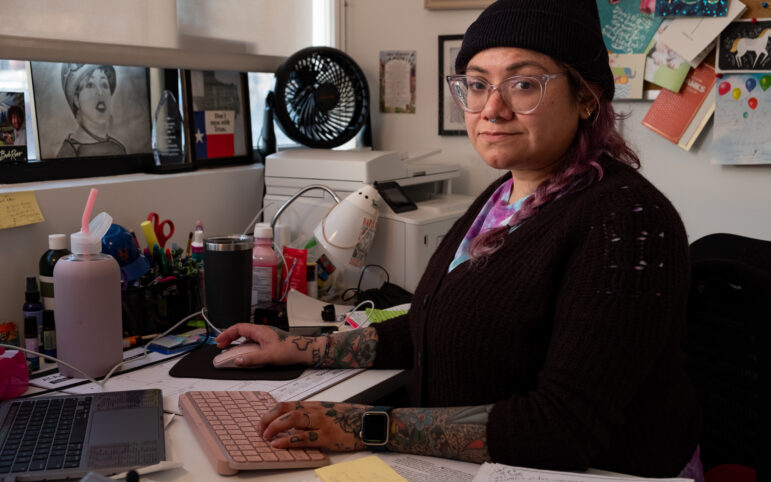
Cathy Barreda, director of the Tenant Rights Coalition at Brooklyn Legal Services in her office located in Brownsville, Brooklyn. “The court thinks that they can decide our caseloads. A lot of longtime practitioners are exhausted,” Barreda said of the current pace of eviction cases.
New York City’s Right to Counsel law was the country’s first to promise representation to the tenants most at risk for eviction: low income New Yorkers. Since it passed five years ago, Right to Counsel has begun to change eviction proceeding outcomes: 84 percent of tenants represented by a lawyer through the initiative stay in their homes, according to city officials.
Though it’s known informally as Right to Counsel, the law is officially called Universal Access to Legal Services. But over the last year, access to the benefit has been far from universal. The number of tenants who have an attorney in the city’s housing court has gone down every month since New York’s eviction moratorium ended in January of 2022, from 66 percent to just 35 percent in the first week of October, according to data tracked by housing advocates. That’s compared to the approximately 95 percent of landlords who are typically represented by lawyers in court.
“There are people who are falling through the cracks,” said Julia McNally, attorney-in-charge at the Legal Aid Society in Queens, one of 18 nonprofit organizations representing Right to Counsel-eligible tenants. “Those people—in the case of an illegal lockout—may never get restored to their apartment.”
More than 100,000 evictions were filed across the five boroughs in 2022, court data shows. That’s a steep drop from the 230,071 filed in 2017, the year that Right to Counsel passed into law, which indicates that it’s been a deterrent to eviction filings. But in every borough, there are more qualified tenants facing eviction than lawyers to counsel them.
“Since March 2022, there have been more than 10,000 cases declined and another 12,000 with limited participation by the Right To Counsel providers,” wrote Lucian Chalfen, director of public information for New York’s Office of Court Administration, via email. In that same time period, the legal service providers accepted about 21,000 cases, according to Chalfen.
Structural issues contributed to the decay of Right to Counsel in 2022, according to more than a dozen attorneys, researchers and advocates who spoke with City Limits. Nonprofit housing lawyers tend to earn lower pay and have a high turnover rate that accelerated during the COVID-19 pandemic. The courts—facing a backlog of cases—are now putting them on the calendar faster than tenants can get lawyers, and the process of eviction itself is designed to move more quickly than other civil cases.
“I get so many calls every single day, but most of the time, a law student in my class will return the call or I will myself, and we’ll do our best to give the person legal advice,” said McNally. “We’re just so constrained with our capacity that we can’t take walk-ins right now.”
A group of organizations tracking eviction and Right to Counsel data, under a project known as the NYC Eviction Crisis Monitor, reported in October that 12,776 tenants—more than half of all tenants facing eviction who have appeared in court since the moratorium ended—have been denied counsel, either because they did not qualify or because legal service providers were overburdened.
Lucy Block, a researcher at the Association for Neighborhood & Housing Development (ANHD), estimated that more than 80 percent of those tenants likely qualify for free counsel, given the income of those typically facing eviction. To qualify for a lawyer through Right to Counsel, a tenant’s household income must be within 200 percent of the federal poverty line, or $55,500 for a household of four.
Not enough information, not enough lawyers
Right now, many tenants are not aware of Right to Counsel, or how it works.
From 2018-2021, tenants, Right to Counsel providers, government officials and advocates shared knowledge and feedback at a yearly public hearing prescribed by the text of the legislation and hosted by the Office of Civil Justice. Despite the mandate and recent accessibility issues, there was no public hearing in 2022, and according to lawyers and advocates, one has still not been scheduled. A spokesperson for the city’s Department of Social Services (DSS), which oversees Right to Counsel and the Civil Justice office, did not respond to questions about the missed hearing.
“As far as housing, I only know so much,” said Mario, a self-represented Bushwick tenant in eviction proceedings, who asked City Limits to withhold his last name because he fears retaliation from his landlord. “They [judges] tell me things, and I can either agree or say I don’t understand. It was overwhelming.”
Mario says his individual income qualifies him for representation through Right to Counsel, but eligibility is based on household income, and his roommate Travis has returned to work. That prevents both of them from receiving representation, even though they aren’t related. The roommates claim to have called every legal service provider multiple times in search of assistance. They have been told that their case can’t be taken by overloaded attorneys, who have to prioritize other cases.
In a case that City Limits observed in Queens housing court on Oct. 17, landlord and first time homeowner Claudette Gouveia represented herself against a tenant who had a Right to Counsel lawyer. She said that while it’s hard to call the law beneficial as a small landlord without a large cash reserve, it doesn’t have the same impact on big landlords who are “trying to get one tenant out and have 20 more waiting on hand.”
By and large, it’s those big landlords who are most likely to be doing the evicting. Data from the housing nonprofit JustFix shows that 89 percent of all residential rental units in New York City list a corporate owner. City Limits reached out to more than a dozen city-based corporate landlords and their lawyers in an effort to get their perspective on Right to Counsel, but none responded for this story.
This fall, both Bronx and Brooklyn county courthouses displayed outdated information about Right to Counsel, from before the COVID-19 pandemic, when the program was still being phased in by zip code. During six visits to civil courts in the Bronx, Brooklyn, and Queens, City Limits met tenants who expressed confusion about where to go to get a lawyer, if they qualified for one, and what documentation they needed to provide.
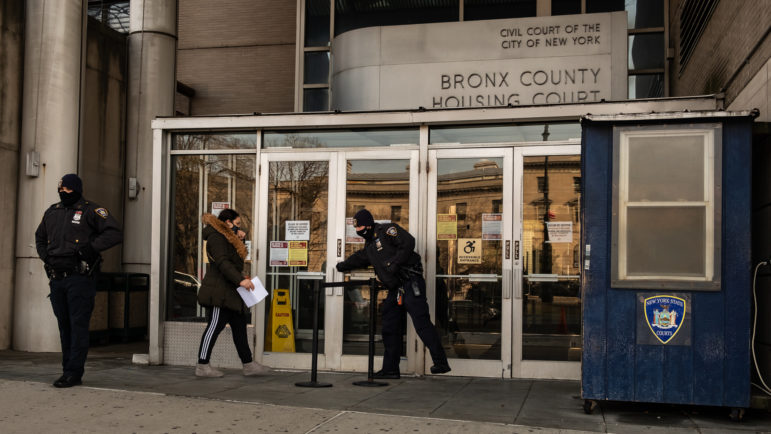
Bronx County Housing Court on Jan. 14, 2022, the day before the state’s pandemic eviction moratorium ended.
Cases moving too quickly
“We ended up with a supply chain issue,” said Andrew Scherer, the policy director of the Wilf Impact Center for Public Interest Law at New York Law School. He said that attrition is common in housing law, and he’s been working to institute programs that shepherd new lawyers into the field.
But the amount of available attorneys is only part of the problem. Scherer said that while the pace of calendaring and the lack of lawyers are important, a larger problem is the process of eviction itself, and how many people face it. Summaryeviction proceedings were originally designed to move more quickly than other types of cases, Scherer explains, an effort to help landlords seize back their property through legal means.
“The courts have not been cooperative enough,” Scherer said. “It’s interesting that they were able to shut it [court] down because of COVID for a long period of time, and then suddenly they opened it up, and it’s as if there’s this incredible sense of urgency that everything has to now keep moving.”
During the COVID-19 pandemic, New York City courts created new intake parts, rooms in which qualified tenants can be matched with Right to Counsel lawyers, to speed up the process. But faster matching without more lawyers was one cause of several legal service providers halting intake for periods of time last spring. Managing attorneys at Legal Services NYC, the Legal Aid Society, and The Bronx Defenders—three of the city’s largest Right to Counsel providers—have all said they’ve had to turn down cases due to the pace of calendaring.
“In the Bronx, we’ve been seeing between 110 and 120 cases being calendared a day,” said Runa Rajagopal, managing director of civil action practice at The Bronx Defenders. “A lot of people are showing up, asking for representation, and their cases are moving forward whether or not they have a lawyer.”
Since last spring, legal providers have called for the city’s housing courts to slow down the speed of cases so they can better keep up with capacity. But that request is at odds with the perspective of many property owners, who are looking to move eviction cases along after the state’s pandemic moratorium halted the proceedings for nearly two years, and as New York’s COVID Emergency Rental Assistance Program (ERAP) has failed to keep up with demand.
“No one has provided owners any deferral or relief from the payment of property taxes or water bills. Insurance and mortgage payments are still due,” the city’s Rent Stabilization Association, which represents some 25,000 landlords, said in testimony to the New York City Council last year about the impact of the eviction moratorium. “There needs to be greater access to the courts.”
In response to questions about the pace of case calendaring, Chalfen of the OCA wrote that: “While we support the idea that as many litigants as possible in eviction proceedings should have attorneys, the Court system is not denying litigants counsel in Housing Court. The inability of the Right To Counsel providers to staff intake calendars is the real reason.” He also referenced “numerous laws and regulations…dictating case movement,” that guide the court’s calendaring speed.
A spokesperson from New York’s Department of Social Services (DSS), which oversees Right to Counsel through its Office of Civil Justice, wrote that it continues to work with legal service providers and the OCA to “ensure that New Yorkers who are entitled to free legal counsel as part of the City’s Right to Counsel program are connected to the supports they need and deserve.”
The city is also working to identify more legal service providers—and thus more lawyers—to add to the program.
Twelve of the initiative’s 18 legal service providers currently list open housing attorney positions on their websites. According to these listings, salaries start at $62,000-$73,000 yearly, which is significantly less than attorneys could make practicing other types of law. Forbes estimates that the average salary for a lawyer in New York state is more than $167,000. And money isn’t the only issue.
“There’s sort of this thing about people not being tough enough,” said Cathy Barreda, a steering committee member of the Right to Counsel NYC Coalition and the director of the tenant Rights Coalition at Brooklyn Legal Services. “So I think the morale is just so incredibly low.”
Barreda says even though her union has a cap of 40 active cases, lawyers go above that limit, and it can be hard to define which cases are active.
“The court thinks that they can decide our caseloads. A lot of longtime practitioners are exhausted. [They] didn’t want Right to Counsel to begin with because they didn’t want it to turn into criminal public defense work,” said Barreda.
Like public defenders, the work of nonprofit housing attorneys often expands beyond their court-related duties, and they represent tenants regardless of the merit of their cases. Legal service providers say the Right to Counsel program doesn’t pay for paralegals or social workers, which means the lawyers have to spend time submitting ERAP applications and applying for housing vouchers, on top of their regular judicial work.
Additional resources could help the program reach more tenants early on, and provide them with that type of assistance in order to avoid eviction proceedings altogether, further freeing up the housing court pipeline.
“There’s a whole host of people who should never be in court,” said Rajagopal. “[They] could get financial assistance, may have matters that should have been resolved, but just end up in the court system.”
In early October, Manhattan Borough President Mark Levine and Bronx Borough President Vanessa Gibson called for a freeze on eviction proceedings when tenants can’t find a lawyer.
Despite the pile up of cases, the council members, alongside the Right to Counsel Coalition, are pushing for the expansion of Right to Counsel to cover people who are above 200 percent of the federal poverty line, but don’t make enough money to hire a lawyer on their own.
“I think it’s rewiring ourselves to see that value on an individual basis, but also from a broader perspective,” said Rajagopal. “We’ve never faced this kind of challenge where we have this hard fought, hard won, beautiful law on the books. It could be more; it could be better, right?”
Opinion: Feds Can Further ‘Fair Housing’ Goals by Adequately Funding NYCHA
“If NYCHA is so dependent upon federal funding, doesn’t the federal government have, not just a moral, but a legal obligation to adequately fund federal housing?”
Adi Talwar
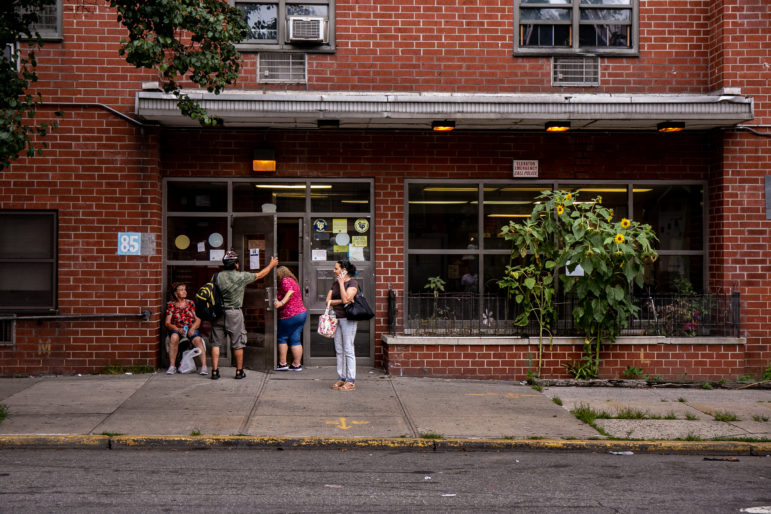
The Hope Gardens NYCHA development in Bushwick.
Public housing in New York City is a critical lifeline to many low- and moderate-income New Yorkers. There are certain facts about NYCHA that are, indeed, astonishing. For example, NYCHA developments house at least 339,900 people, which amounts to 3.9 percent of New York City’s entire population. Rents are adjusted with income, which means that even when residents face economic hardship—for example, due to illness or loss of a job—they have the ability to keep their rent affordable and avoid housing instability or eviction. NYCHA has also been a leader and model of innovation in various fields, including energy efficiency, climate resiliency, and waste management.
But there is no denying that NYCHA has been plagued with problems of immense proportion. Things became so dire that, in 2019, NYCHA entered into a settlement agreement with the U.S. Department of Housing and Urban Development (HUD) after federal prosecutors alleged that NYCHA was systematically failing to maintain its properties in a safe and sanitary manner. They also alleged that NYCHA had engaged in deceptive practices regarding the existence of lead-based paint in its apartments with children living in them. Since then, while NYCHA has made incredible efforts and steady progress, grave and systemic problems remain.
I briefly worked at NYCHA as special counsel in the Office of Strategy & Innovation, a small unit whose mission is to develop and implement the transformative changes required by the HUD agreement. This position allowed me to see first-hand how a significant portion of NYCHA’s ongoing problems stem from two things: first, NYCHA’s portfolio comprises aging and deteriorating housing stock, and second, NYCHA lacks the funding to undertake wholesale modernization efforts across its portfolio. In fact, in 2017, NYCHA determined that it would need $45.2 billion to adequately meet its capital needs over the next 20 years. That is money that it simply does not have.
NYCHA receives funding from various sources. A central component, however, comes from the federal government. Specifically, NYCHA receives about 60 percent of its operating budget and 50 percent of its capital budget from federal funding. Yet federal investment in public housing has steeply declined since the 1970s, as there was a political push away from public housing and toward privatization. Since 2000 alone, there has been a 17 percent decline in public housing funding from the federal government. The decline has forced NYCHA to think of creative methods to close the funding gap by converting developments from public housing to a form of Section 8, whether through the RAD/PACT program or the New York City Public Housing Preservation Trust. Those options, however, are complex and have engendered some controversy.
My time at NYCHA and background as a litigator led me to question: If NYCHA is so dependent upon federal funding, doesn’t the federal government have, not just a moral, but a legal obligation to adequately fund federal housing?
NYCHA developments fit this description. According to data current through March 2022, 43 percent of NYCHA’s families identify as Black, and 45 percent identify as Hispanic; 42 percent of public housing families survive on a fixed income, and over 12 percent receive public assistance. Moreover, many NYCHA developments are located in areas that could be considered lower-opportunity, meaning that they are far from cultural and commercial hubs and are located in areas with relatively high crime and poverty rates.
And while HUD is not intentionally discriminating against NYCHA residents (and, in fact, has many smart, dedicated, and hardworking public servants who fight daily to improve life for NYCHA residents), its inability to adequately fund public housing is nevertheless disproportionately impacting Black and Latinx New Yorkers. The failure to adequately fund public housing is, therefore, arguably, the failure to take meaningful action to affirmatively further fair housing.
Of course, HUD does not allocate its own funding, so while it may be responsible on paper, it is not necessarily to blame. Funding is Congress’s responsibility. Yet when it comes to obligations mandated by federal law, strained resources may not be a defense. Recently, Chief Justice John Roberts noted in an argument regarding federal immigration enforcement that it’s the Judicial Branch’s “job to say what the law is, not whether or not it can be possibly implemented or whether there are difficulties. . . I don’t think we should let [the Executive Branch] off the hook.”
The courts, thus, have a role to play in the fight for fair housing. Specifically, they have the ability to declare that the failure to provide sufficient funding to NYCHA to allow it to meet its operating and capital needs is inconsistent with the obligations imposed by the Fair Housing Act. If Congress won’t voluntarily fund public housing, there may be an opportunity for courts to “say what the law” is to help ensure that NYCHA residents have safe and habitable homes.
Andrew Darcy is a supervising attorney in the Housing Project at Mobilization for Justice, Inc., where he represents tenants in eviction proceedings and in matters relating to the Fair Housing Act.