Thursday, December 29, 2022

Vendedores ambulantes de la ciudad recibieron el doble de multas este año en comparación con los niveles pre-pandemia

En 2019, cuando la policía de Nueva York era el único encargado, emitió 1.812 multas frente a 2.499 en los primeros nueve meses de este año, con casi la mitad (48.6 por ciento) repartidas en el último trimestre. En solo nueve meses, la policía de Nueva York y el Departamento de Protección al Consumidor y al Trabajador (DCWP por sus siglas en inglés) emitieron 3.884 multas a vendedores, más del doble de la cantidad de multas emitidas en 2019.
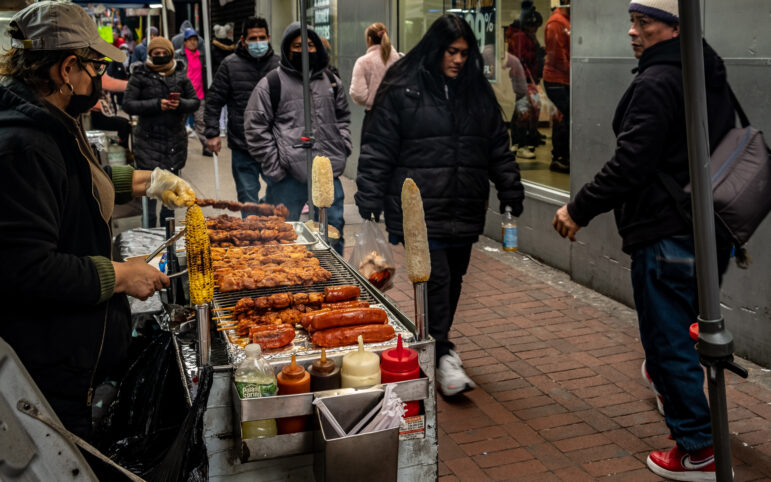
Adi Talwar

Vendedor ambulante en Roosevelt Avenue en Jackson Heights, Queens, el código postal que tuvo la mayor cantidad de multas este año por parte del Departamento de Protección al Consumidor y al Trabajador de la ciudad (DCWP por sus siglas en inglés).

Este artículo apareció originalmente en inglés. Translated by Daniel Parra.

Read the English version here.

Este año, la policía de Nueva York (NYPD por sus siglas en inglés)  ha sido el principal organismo encargado de hacer cumplir la ley contra los vendedores ambulantes, rompiendo con una promesa anterior de eliminarlos del proceso como parte de las reformas anunciadas por el exalcalde Bill de Blasio.

La policía ha puesto más multas a vendedores en 2022 que el Departamento de Protección al Consumidor y al Trabajador (DCWP por sus siglas en inglés), según un análisis de datos de City Limits, a pesar de que el DCWP se hizo cargo de la aplicación de la ley el año pasado tras la aprobación de la ley de reforma de los vendedores ambulantes del Concejo de la Ciudad. Ese cambio fue codificado en una orden de operaciones emitida a los agentes de policía a principios de 2021, que aconsejaba evitar tomar medidas relacionadas con la vigilancia de los vendedores “en ausencia de circunstancias exigentes”.


La cantidad de multas emitidas a vendedores ambulantes en los primeros tres trimestres de 2022 también ha aumentado, superando con creces lo que se vio en el año anterior a la pandemia (City Limits está comparando las cifras de este año con las de 2019, ya que ese fue el último año completo pre COVID-19. La ciudad multaba activamente a los vendedores, pero la pandemia detuvo la mayor parte de la aplicación de la ley en 2020. Durante la primera mitad de 2021, cuando el DCWP pasó a hacerse cargo, el foco era la divulgación y educación de los vendedores ambulantes en lugar de emitir multas).

En 2019, cuando la policía era el único encargado, la policía emitió 1.812 multas, frente a las 2.499 emitidas en los primeros nueve meses de este año, con casi la mitad (48,6 por ciento) repartidas en el último trimestre, según un análisis de los informes trimestrales del departamento de policía de Nueva York.

Mientras tanto, DCWP emitió 1.385 multas en los primeros tres trimestres de 2022. En solo nueve meses, las dos agencias de la ciudad emitieron 3.884 multas, más del doble de la cantidad de multas emitidas a los vendedores durante 2019.

“Aunque la responsabilidad principal está a cargo del Departamento de Protección al Consumidor y al Trabajador, la policía de Nueva York mantiene su autoridad para hacer cumplir todas las infracciones y los oficiales usan un alto nivel de discreción”, dijo un portavoz de la policía, y agregó que trabajaron con la oficina del alcalde en la transición, que incluyó la disolución del grupo de trabajo de vendedores ambulantes del NYPD.

Durante años, los vendedores ambulantes y sus defensores han estado presionando para eliminar la participación de la policía en la aplicación de la ley, argumentando que la práctica es demasiado punitiva contra una industria compuesta en gran parte por inmigrantes neoyorquinos y personas de color.

“Queremos ver a la policía de Nueva York completamente fuera de esto”, dijo la concejal Shahana Hanif, presidenta del comité de inmigración.

En enero de 2021, la policía de Nueva York dejó oficialmente de ocuparse de la aplicación de la ley a los vendedores y, durante la primera mitad de ese año, el DCWP llevó a cabo campañas de divulgación y educación, y no empezó a multar hasta junio. Mientras tanto, una ley para aumentar gradualmente el número de permisos que los vendedores de alimentos necesitan para operar legalmente, que la ciudad había limitado durante décadas, se ha estancado.  (El Departamento de Sanidad de la ciudad, encargado de esa ampliación, declaró a Mother Jones en octubre que estaba “avanzando” en esos planes).

El número limitado de permisos actualmente disponibles, dicen los defensores, ha hecho que sea casi imposible para la mayoría de los vendedores ambulantes operar legalmente, obligando a muchos a pagar miles de dólares por permisos en el mercado negro para continuar trabajando.

“La ciudad ha creado un problema artificial de escasez al limitar la cantidad de licencias”, dijo el concejal Shekar Krishnan, cuyo distrito de Jackson Heights vio a la mayoría de sus vendedores ambulantes inspeccionados y multados por DCWP tanto este año como el año pasado. “La legalización del trabajo [de los vendedores] y el reconocimiento de su importancia para la ciudad de Nueva York están muy retrasados. ”
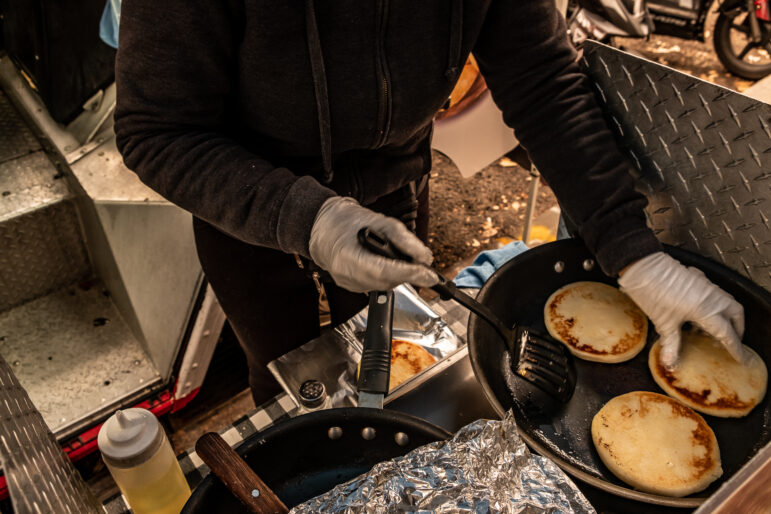
Adi Talwar

Un vendedor de pupusas en Queens.


¿Dónde se rompen las reglas?

NYPD no desagrega la cantidad de multas que emitió a los vendedores ambulantes por código postal, pero el DCWP sí lo hace. Desde que la agencia comenzó a repartir multas, Jackson Heights (código postal 11372) ha sido el área con mayor número de multas para los vendedores tanto en 2021 como en 2022, aunque no se encuentra entre los cinco códigos postales que reciban más quejas por la presencia de vendedores ambulantes. 

Top Códigos Postales para Quejas for Complaints # de Quejas Top Códigos Postales para Inspecciones # de Inspecciones Top Códigos Postales para Multas # de Multas
10001 1,185 11372 915 11372 147
10004 611 11220 656 10036 84
10007 481 11354 590 10001 67
10005 401 11368 571 11368 55
10019 304 11355 395 10003 54
Códigos postales que registraron el mayor número de denuncias de vendedores, inspecciones y multas del DCWP en 2022 hasta la fecha.

En el pasado, el DCWP ha argumentado que la aplicación de la ley es a menudo una respuesta a las quejas del público en general, los funcionarios electos, las juntas comunitarias y los distritos de mejora comercial, que se han enfrentado con los vendedores por cosas como la basura, las aceras bloqueadas y su impacto potencial en las pequeñas empresas de ladrillo y mortero. 

La ciudad recibió más quejas sobre vendedores ambulantes este año en comparación con el anterior: hubo 4.736 quejas de vendedores en 2021 frente a 7.081 en los tres primeros trimestres de 2022.

Sin embargo, solo uno de los códigos postales con más quejas este año está entre los cinco primeros con multas, lo que pone de relieve la diferencia observada en otros análisis de datos entre dónde se originan las quejas y dónde se reparten las multas. Cuando se le preguntó al respecto, el portavoz de DCWP, Michael Lanza, explicó que las multas son el resultado de violaciones de la ley. 

“La cantidad de inspecciones que resultan en multas depende de si el proveedor cumple con las reglas y detiene cualquier conducta ilegal identificada durante la inspección, ya que DCWP emplea un enfoque de educación primero”, agregó. “DCWP emite más citaciones en las áreas donde los vendedores se niegan a seguir las instrucciones de los inspectores”.

Vendedores ambulantes como Cleotilde Juárez, de 31 años, dijeron que no han visto el enfoque de educación de DCWP en Jackson Heights, donde trabaja vendiendo chalupas poblanas, una comida callejera icónica de Puebla, México. 

“Eso no es cierto”, dijo Juárez. “Ellos [DCWP] vienen y dicen: ‘Dame tu identificación y toma tu multa’. Ellos no son los que educan. No. Son las organizaciones”. 

Condado Quejas Inspecciones Multas
BRONX 432 1202 107
BROOKLYN 1018 2502 232
MANHATTAN 4625 336 611
QUEENS 868 3514 433
STATEN ISLAND 26 13 2
Quejas, inspecciones y multas por condado del DCWP en lo que va del 2022.

Manhattan vio la mayor cantidad de quejas y multas en comparación con los demás condados de la ciudad de Nueva York, seguido de Queens. Dos códigos postales de Queens, 11372 y 11368, que abarcan Jackson Height y Corona, representaron casi la mitad (46 por ciento) de todas las multas (433) del condado de Queens para este año. Ambos barrios son conocidos por su amplia y variada oferta gastronómica, lo que, según sus partidarios, favorece a los comercios locales. 

“Tanto los neoyorquinos como los turistas de todo el mundo reconocen a Jackson Heights y Corona como ‘destinos gastronómicos’, lo que da lugar a toda una economía de recorridos gastronómicos, eventos culturales, atrayendo tráfico peatonal y comercio al área”, dijo Carina Kaufman-Gutiérrez, subdirectora del Proyecto de Vendedores Ambulantes (SVP).

La congresista Alexandria Ocasio-Cortez, quien representa a ambas áreas, dijo que “los vendedores ambulantes en comunidades de inmigrantes como Jackson Heights han enfrentado un hostigamiento histórico por parte de la policía de Nueva York por tratar de ganarse la vida honestamente alimentando a sus comunidades”. 

“Es muy alarmante que DCWP continúe llevando a cabo prácticas policiales, complicando la vida de los vendedores al disminuir sus ingresos diarios y ahogándolos con fuertes multas mientras los vendedores siguen sujetos a la vigilancia excesiva por parte de la policía de Nueva York”, dijo la legisladora en un comunicado. 
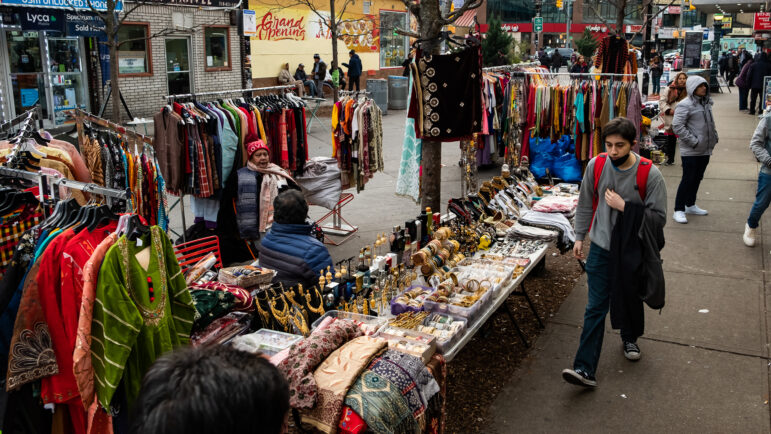
Adi Talwar

Vendedores ambulantes cerca de Roosevelt Avenue en Jackson Heights, Queens.

Inmigrantes inspeccionados

Los barrios con gran población inmigrante también siguen estando entre los más inspeccionados por DCWP desde 2021, como ya informó City Limits, pero este año Queens está en el centro de ellos. Esto supone un cambio respecto al año pasado, cuando Manhattan fue el distrito más inspeccionado.

Los cinco códigos postales con la mayor cantidad de inspecciones por parte de la agencia en 2022 son barrios con una gran población de inmigrantes, y ninguno de estos está en el top de las quejas. La zona más inspeccionada, Jackson Heights, tuvo más inspecciones (915) que denuncias en todo el condado (868). 

DCWP reiteró que las inspecciones no se desencadenan exclusivamente por quejas, aunque no dieron detalles sobre qué más desencadena una inspección. “DCWP realiza inspecciones en áreas donde los proveedores operan con frecuencia y en respuesta a las quejas que recibimos”, dijo Lanza.

Sin embargo, el presidente del condado de Queens, Donovan Richards, calificó el patrón de inspección como una “política xenófoba”. 

“¿Por qué hay este exceso de aplicación de la ley en estas comunidades?”, dijo. “La criminalización no es la forma de abordar la pobreza”.

Tanto el año pasado como este año, Manhattan ha sido el epicentro de las quejas, generando más del 65 por ciento en 2022, con cinco veces más quejas que Queens y más de cuatro veces que Brooklyn, según datos de DCWP.

Pero Queens ha sido hasta ahora el condado más inspeccionado (3.514). Una de cada tres inspecciones de la DCWP tuvo lugar en Queens, según los datos.

“A pesar de que la mayoría de las quejas se concentraron en Manhattan, los datos revelan que las prioridades de DCWP no son los códigos postales ricos sino las comunidades vulnerables de inmigrantes de clase trabajadora”, dijo Ocasio-Cortez.

“Si nuestras comunidades de Queens no constituyen la mayoría de las quejas de venta ambulante, ¿por qué DCWP está utilizando sus recursos para emitir la mayor cantidad de multas e inspecciones aquí que en cualquier otro lugar de la ciudad?” , dijo Ocasio-Cortez en un comunicado. “La DCWP debería aclarar el razonamiento que subyace a sus directivas de control desproporcionado”.

Frustraciones de los residentes 

Sin embargo, la concejal Marjorie Velázquez, que preside la Comisión de Protección de los Consumidores y los Trabajadores, afirmó que DCWP se toma en serio las quejas de los consumidores y trabaja para garantizar que los vendedores ambulantes -que llevan mucho tiempo contribuyendo a la economía de la ciudad- rindan cuentas, especialmente los que infringen la ley. 
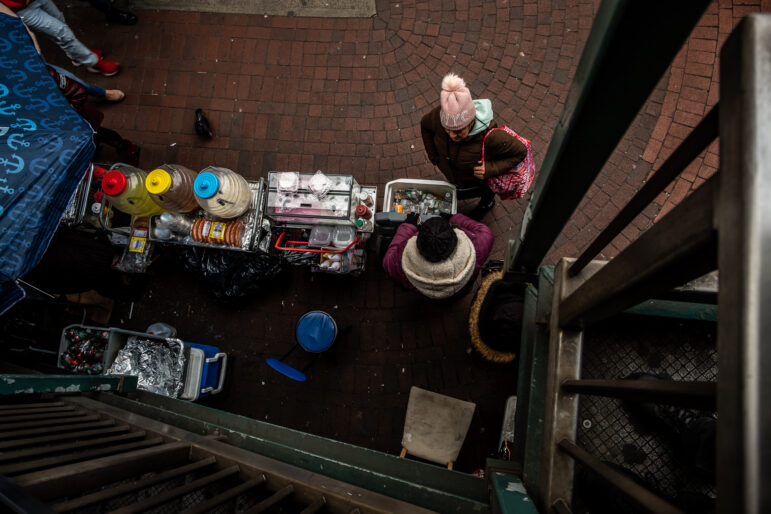
Adi Talwar

Un vendedor en Jackson Heights, Queens.

“Como presidente del Comité de Protección al Consumidor y al Trabajador, debo actuar en el mejor interés de nuestra comunidad, y eso significa apoyar a los vendedores legales mientras trabajo con DCWP para garantizar que todas las partes rindan cuentas”, dijo Velázquez.

Otros legisladores señalan problemas de calidad de vida asociados con la venta ambulante que, según ellos, justifican una amplia aplicación de la ley. Dos códigos postales que forman parte de Flushing (11354 y 11355) también tuvieron más inspecciones que todas las quejas en Queens.

“Una de las quejas más comunes que recibe mi oficina es sobre la proliferación de vendedores ambulantes sin licencia en el centro de Flushing”, dijo la concejal Sandra Ung, quien enfatizó que sus declaraciones solo se aplican al distrito que representa y no pretenden reflejar la aplicación de la ley en otros barrios

“Se ha convertido en un problema de seguridad pública, desde personas con problemas de movilidad que ya no pueden caminar por las aceras hasta los riesgos para la salud de la venta no regulada de comida de mar aún viva en las calles de la ciudad. Además, muchos de los vendedores más grandes venden productos falsificados y bloquean los cruces peatonales, las bocas de incendio y las paradas de autobús y metro”, agregó Ung.

Según Ung, DCWP ha alentado el cumplimiento en Flushing, recurriendo a las multas solo cuando esos esfuerzos se han agotado o para los infractores reincidentes. “La aplicación de la ley que DCWP emprende en el centro de Flushing es una respuesta a las frustraciones de los residentes en el único distrito de mayoría asiática en el Concejo de la ciudad”, dijo.

Para la concejal de Flushing, el bajo número de quejas enviadas al DCWP desde su distrito no significa que la venta no sea un problema allí, pero puede atribuirse a la falta de confianza en el gobierno y las barreras del idioma. “Las quejas registradas oficialmente son históricamente bajas en comunidades de inmigrantes con una gran cantidad de residentes con dominio limitado del inglés que se sienten incómodos usando los canales oficiales del gobierno”, dijo Ung, y agregó que ella patrocinó dos leyes para mejorar el acceso al idioma para personas con dominio limitado del inglés que necesiten llamar al 311

La venta ambulante ha sido objeto de acalorados debates en Flushing durante años. En 2018, el entonces concejal Peter Koo patrocinó una legislación que creó zonas de no venta en el centro del vecindario. Pero los defensores argumentan que las multas y las áreas de tolerancia cero no son soluciones.

“En un momento en que la recuperación económica para los inmigrantes y las personas de color de bajos ingresos parece ser de suma importancia para la ciudad, es inaceptable que los vendedores ambulantes sigan siendo criminalizados por hacer un servicio público y operar negocios honestos”, dijo Mohamed Attia, director general de SVP. “En realidad, los vendedores son parte de lo que mantiene segura a nuestra ciudad. Son los ojos en la calle, son constructores de comunidades y vecinos”. 

Attia se sumó a quienes piden que la ciudad avance en la aplicación del proyecto de reforma de la venta ambulante del Concejo, la Ley Local 18, que se suponía iba a empezar a aumentar el número de permisos de venta este verano. Pero no se ha concedido ningún permiso más de cinco meses después de lo prometido. 

“Estos datos demuestran lo desequilibrada que está la estrategia municipal con respecto al sector de la venta ambulante”, afirma Attia. “Solo se está invirtiendo en hacer cumplir la ley, y no en aplicar la Ley local 18”.

La senadora estatal Jessica Ramos patrocinó un proyecto de ley a principios de este año que habría eliminado por completo el límite de permisos y que dejaría sin efecto las condenas anteriores por delitos de venta ambulante que afectan especialmente a los inmigrantes. Pero la ley no se aprobó en la sesión legislativa más reciente, empujando este tema para que se debata nuevamente en Albany en 2023.

“La ciudad debería abordar el meollo de la cuestión y comprometerse a elevar sustancialmente el límite de permisos para satisfacer la demanda real de los vendedores que se encuentran en una situación desesperada”, dijo Ocasio-Cortez.


tiktok coins free tiktok coins free 2023 tiktok coins free generator tiktok unlimited coins

Labels:

Opinion: Fare Hike is the Wrong Approach to MTA’s Financial Woes

“If New York’s city and state leaders truly prioritize a society where social equity as well as environmental sustainability are fundamental values, discussion of subway and bus fare increases would not be on the table. And if the overarching goal is to bring riders back to the nation’s greatest public transit system, why disincentivize them with higher fares?”

Adi Talwar

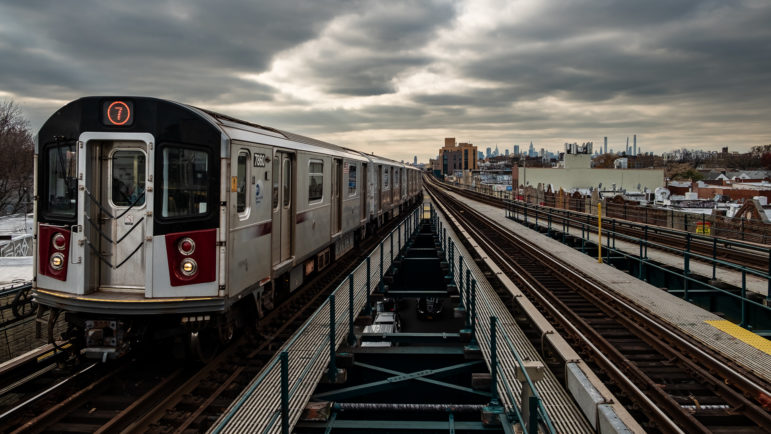
The 7 train approaching Junction Boulevard Station in Jackson Heights, Queens.

Metropolitan Transit Authority (MTA) officials recently said they may need to raise subway and bus fares by 5.5 percent in 2023 to shore up the operating budget, which has been drained by a pandemic-induced drop in daily ridership. Fares could go as high as $3 by 2025.

Before the pandemic, subway and bus fares accounted for 42 percent of MTA revenue. Now, fares make up just 23% of the operating budget.  The loss in farebox revenue has helped lead to a $1.6 billion deficit.  MTA officials say they plan to ask the state for more money but they’ll still have a $600 million shortfall.

At $2.75 per ride, subway and bus fares in New York City are already among the most expensive major public transit systems in the country. And although 900,000 New Yorkers live in poverty, only around 278,000 riders are enrolled in the system’s half-price Fair Fares program. Thousands of New Yorkers with limited incomes likely experience days where they are forced to choose between food or going to work, a job interview or class.

If New York’s city and state leaders truly prioritize a society where social equity as well as environmental sustainability are fundamental values, discussion of subway and bus fare increases would not be on the table. And if the overarching goal is to bring riders back to the nation’s greatest public transit system, why disincentivize them with higher fares?

Instead, why not lower fares, drastically, to a ridiculously affordable amount, perhaps just $1 per ride. Lowering the fare would not only take a vast portion of the economic burden off the backs of millions of current transit users, it just might incentivize scores of other leery New Yorkers to hop back on buses and subways, significantly growing farebox revenues over time.

During a Nov. 30 board meeting, MTA Chair Janno Lieber basically instructed local and national policy makers and advocates to put on their thinking hats and come up with an alternative funding solution if they want to avoid a fare increase.

“We could definitely avoid a fare hike if there is a plan, an answer, coming from all of the decision makers, Washington, Albany, City Hall, and maybe others, that fills the $600 million gap,” Lieber said.

In addition to seeking more federal aid, perhaps city and state leaders could also explore potentially significant and currently untapped revenue streams on the city’s largest public space, our streets.

Last year, the MTA and governor postponed a predicted two-year fare increase in a move meant to attract riders back to the system. Despite that muted effort, day to day ridership on the subway, bus and commuter rail system has remained at about 60 percent of pre-pandemic levels.

Meanwhile, car ownership numbers are way up and automobile traffic has come roaring back with streets, avenues and bridges just as choked up and congested as they were before the pandemic. Data shows the number of automobiles paying tolls on MTA-controlled bridges and tunnels has not only rebounded, on some days, it actually surpasses pre-pandemic numbers. For example, on Nov. 28, MTA collected tolls from 904,337 vehicles, or 118 percent of the comparable pre-pandemic day.

And while the implementation of congestion pricing will tap into that traffic in parts of Manhattan, producing around $1 billion each year in revenue for MTA coffers, it’s still far short of what the system needs to continue offering the level of service it does today on a long term basis.

Data from the city’s Department of Transportation shows an average 443,000 cars crossed the Ed Koch-Queensborough, Williamsburg, Manhattan and Brooklyn Bridges each day in 2018.  Assuming those numbers are still somewhat accurate, tacking on an additional $3 crossing fee could bring in an extra $1.3 million in dedicated daily funding that could be earmarked for the MTA.

The city is also home to an estimated 3 million or more curbside parking spaces and around 95 percent of those spaces are free. Laid next to each other, those 3 million street parking spaces would span nearly halfway around the earth.

New York City, unlike most other large U.S. cities, does not have any residential parking program that would require monthly or yearly permits to park in certain neighborhoods. Instead, the estimated 45 percent of New Yorkers who own automobiles are essentially provided a subsidy to store cars, the overwhelming majority of which are SUVs the size of tiny Manhattan studio apartments, on public space for free.

If the city implemented a system where automobile owners are charged an average $100 per year for a neighborhood parking permit, revenues could reach well into the hundreds of millions of dollars in MTA funds. In other neighborhoods, metered hourly parking might be a better approach, but in any case, charging drivers a nominal fee to store their automobiles would benefit far more New Yorkers than those inconvenienced.

If there were ever a moment for a brave, bold and fair rethinking of how we fund the nation’s largest public transit system, it’s now. Whatever the funding solution turns out to be, New Yorkers who rely on the subways and trains for their livelihoods shouldn’t be the ones bearing the financial burden. 

Cody Lyon is a former journalist and a Manhattan Community Board 1 member.


tiktok coins free tiktok coins free 2023 tiktok coins free generator tiktok unlimited coins

Labels:

NYCHA Blames Dreary Financial Outlook on $454 Million in Unpaid Pandemic Rent

More than 73,000 NYCHA households are behind on rent, which officials say will force the public housing authority to draw from dwindling operating reserves and make other cuts in the year ahead—and could potentially hamper its repair plans. Meanwhile, the state’s already exhausted Emergency Rental Assistance Program (ERAP) to aid New Yorkers in arrears is unlikely to reach NYCHA.

Adi Talwar

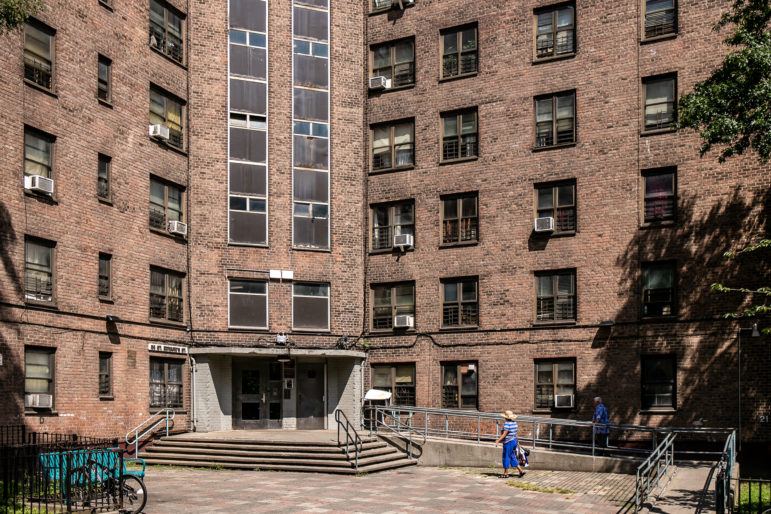
A New York City Housing Authority building in the Ingersoll Housing complex near Downtown Brooklyn.


More than 73,000 NYCHA households are behind on rent, which will force the public housing authority to draw from dwindling operating reserves and make other cuts in the year ahead—and could potentially hamper repair plans required under an agreement with the feds, officials said Wednesday.

Meanwhile, the state’s already exhausted Emergency Rental Assistance Program (ERAP) to cover New Yorkers’ rent arrears is unlikely to reach NYCHA tenants, who were given the lowest priority under the COVID rent relief initiative. The roughly 31,330 NYCHA households who have applied for ERAP relief owe a combined $250 million, authority officials said, but the relief fund, which pays landlords up to 12 months of unpaid rent, could only cover a maximum of $120 million.

“Any money we’d get through ERAP only solves half of the problem of arrears,” NYCHA Chief Financial Officer CFO Annika Lescott-Martinez said.

The revenue hole, she added, will make it harder for the housing authority to comply with the requirements of its 2019 agreement with the U.S. Department of Housing and Urban Development (HUD), in which the city committed to investing billions to make capital repairs and to address problems like mold, pests and lead paint on specific timelines. All told, tenants owe $454 million in total arrears systemwide, including money that was not paid prior to the pandemic.

“At some point if you don’t have sufficient revenue, it becomes more difficult to achieve those goals,” Lescott-Martinez said.

NYCHA officials, outlining the agency’s financial outlook at a board meeting Wednesday, pointed to dwindling rent collections over the last several years. The housing authority collected 88 percent of rent from tenants over 12 months in 2019, but only 65 percent in 2022, with arrears growing from $125 million to $454 million during the same period.

“There has been a change in attitude around paying rent,” since the start of the pandemic and the launch of the ERAP program, said NYCHA CEO Lisa Bova-Hiatt.

But it’s doubtful whether NYCHA will even receive that $120 million, since the state legislation that established ERAP prioritized funding for tenants in private-market apartments over NYCHA applicants. Demand for the relief program has long outstripped available funds, and it’s unlikely that the $800 million the state allocated this spring to replenish the program will be enough to cover the tens of thousands of applicants still waiting. The portal to apply for the program is set to close in mid-January.

“By law, this program cannot pay applications from subsidized housing unless all others are paid first,” Hazel Crampton-Hays, a spokesperson for Gov. Kathy Hochul, said in a statement. NYCHA officials said they have urged state lawmakers to make changes to ERAP, either by refunding it again or better prioritizing their applicants in light of the housing authority’s fiscal woes. A bill which would have given NYCHA the same priority for ERAP as other tenants passed the State Senate in June, but not the Assembly.

“We continue to evaluate the funds remaining in this program and how many applications will ultimately be paid once the portal closes next month, and we remain in ongoing communication about these issues with impacted parties,” Crampton-Hays added.

In the meantime, NYCHA tenants with a pending ERAP application are protected from eviction under state law until a decision is made on their case, which also makes them ineligible for other rental assistance programs.

“Both NYCHA and the tenants are very much in this holding pattern, where we can’t enforce, and they are expecting ERAP, and they are not paying,” Lescott-Martinez told board members Wednesday. “Our goal is house people so it’s really not in our prerogative to try and evict everyone, but we really do need the revenue.”

Iziah Thompson, a senior policy analyst specializing in public housing at the Community Service Society (a City Limits funder), criticized NYCHA’s framing around the arrears, but said unpaid rent is indeed a serious problem for an agency that relies on monthly payments to cover about a third of its operating budget.

“The idea that there is some sort of ‘culture change’ is an unfair characterization,” Thompson said. “But they are totally right to blame this shortfall on unpaid rent.”

He said state lawmakers chose to effectively exclude NYCHA from the rent relief fund, punishing hundreds of thousands of tenants. “They put them on the end of the list without thinking about how NYCHA needs rent to operate,” he said.

NYCHA officials told board members that without that full rent funding stream, the agency will be forced to draw $65 million from its operating reserves in 2023, after tapping additional millions from those reserves during the last two years. The housing authority said that fund will have less than a month’s reserves left at the end of this year without an infusion of cash, well below the three to four months-worth that HUD recommends.

Anticipating a $35 million year‐end deficit in 2023, NYCHA is planning additional proactive measures, such as cutting “non-essential contracts,” which top officials described as financial, legal and back-office jobs. The authority already eliminated 50 percent of vacant budgeted positions in its central office, and future reductions may still be on the table.

“The goal is to prioritize services for residents, but we wanted to telegraph that, while we have been able to manage the problem over the last three years by pulling from our reserves, you can’t continue to do that,” Bova-Hiatt told reporters.

The dire economic projections come as NYCHA continues its push for other capital funding streams, asking tenants at some 25,000 apartments to cast ballots in the year ahead for one of three money-raising models. Residents will decide if they want to turn their development over to private management through NYCHA’s existing RAD-PACT program, by entering into a newly-created public trust or by maintaining the current public housing model under Section 9.

NYCHA officials say converting complexes to RAD-PACT or the Preservation Trust will allow them to raise more money by switching to the Section 8 program, which comes with more federal funding than Section 9. But some tenants remain deeply skeptical of both proposals.

Officials say the authority needs around $40 billion in capital funds to address systemic issues with its housing stock, following decades of disinvestment and underfunding from all levels of government that have left buildings riddled with violations and more than 673,000 open work orders.

Advocates say state and federal lawmakers need to act fast to ensure NYCHA can make those desperately needed capital repairs—and that public housing tenants remain housed.

“If they don’t want to see a bunch of public housing tenants evicted, then they need to provide these funds,” Thompson said. “There’s tons of blame to go around and we don’t want to play blame game. This money just needs to come from somewhere.”


tiktok coins free tiktok coins free 2023 tiktok coins free generator tiktok unlimited coins

Labels:

Q&A: Journalist Yevgenia Albats on Curiosity and Freedom of the Press

Yevgenia Albats, a Russian investigative reporter who is currently the Distinguished Journalist in Residence at the NYU Jordan Center, recently spoke to City Limits’ youth reporting interns about what it’s like to be a journalist in a country that does not have a free press.

Screenshot

Dr. Yevgenia Albats, center, speaking on Zoom with student reporters enrolled in the CLARIFY program.

Yevgenia Albats, a Russian investigative reporter who is currently the Distinguished Journalist in Residence at the NYU Jordan Center, recently spoke to City Limits’ youth reporting interns about what it’s like to be a journalist in a country that does not have a free press.

Albats has been an editor with Moscow-based The New Times since 2007, and continues to run the outlet despite being forced to leave Russia in August amidst ramped up media censorship, after the government pronounced her a “foreign agent” for her critical coverage of the Ukraine War. “That’s the only choice that was left—either go to jail or to leave, so I left,” Albats told CNN in October.

She recently sat down with participants in the City Limits Accountability Reporting Initiative for Youth (CLARIFY), which trains New York City high school students in public-service journalism. Here’s an overview of that conversation, which touched on the qualities of a good investigative reporter, confronting the blank page and how you can never ask too many questions.

The following conversation has been edited and condensed for clarity.

Albats [on her background]: When I started as a journalist in the Soviet Union, it was a totalitarian country, which didn’t have any freedom of speech, and no freedom of assembly. And of course, no journalism existed. It was this peculiar form of journalism when people who pretended to be journalists produced the narrative for the party in power and some others covered topics which were divorced from any politics. I covered science at the time, and then the Soviet Union fell apart in 1991, and shortly before that I joined the frontline paper of that time and started covering the Soviet Union political police, the KGB. However when I say I started covering, it wasn’t exactly right, because it was impossible to cover something that was very secretive, very closed. Basically you had to steal the information, somehow sneak in in order to write something about what was happening there. Then there was 10 years of relative freedom, and then in 2000 a KGB man became the president of Russia, and now 22 years later we have a full-fledged authoritarian regime.

CLARIFY Student Reporter: What made you want to get into investigative journalism?

Albats: Thank you for your question. I think the short answer is, curiosity. What’s lovely about our line of work is that you can be personally interested in certain subjects, curious about things and you go and you dig in. Since our job requires digging in, of course you need to know certain tools on how to do this, but still, that’s the most important thing—I’ve always been writing about stuff that I’ve been personally interested in. 

CLARIFY Student Reporter: Has there ever been a moment or any point in time where you felt like you just weren’t up for investigative journalism anymore?

Albats: Oh yes, many, many times in my life. Basically, each time when I was facing the blank page and I tell myself, ‘Really, why am I doing this? Do I really want to do this? Maybe I shouldn’t do this, maybe it’s time for me to go.’

And then you make yourself write the first sentence. And then of course you delete it. And then you write the first paragraph, and of course you understand it was a total shitty paragraph. And then you write the first page and then you go, and then at some point you feel like flying, you really feel high without any drugs, you just feel high, because you realize that you’ve got the wind of the story. You know how you’re going to write this, the sections, the structure, you understand how you are going to outline your argument, how you are going to use the quotes, etc. etc., and then of course, everything’s great.

CLARIFY Student Reporter: My question is what your experience was like navigating the obstacles of being an investigative journalist in Russia. And specifically, what were your biggest challenges?

Albats: These kinds of obstacles exist in basically each and every country. Investigative journalism and political journalism is a risky business in any country, whether it’s the United States, Russia, South Africa, you name it. People who do this do it because we are in the business of telling truth to power, whether we’re talking about authorities, about rich and powerful guys, or military or dictators. So first, you have to be very much aware that what you do is really important. I believe in the common good. I believe that is something that drives us as human beings. Investigative journalism is not about money. You can become famous, but you cannot become rich. 

Obstacles are everywhere, bad guys try to conceal the truth, they try to conceal information, and our job is uncovering.  But it’s not enough to just uncover information, we have to prove, we have to find documentary evidence. We have to see the story from different angles, and different points of view. We can’t rely on one source because there are plenty of people around who are happy to use us to their own ends, so we have to find second sources, sometimes third sources. There will be plenty of people who try to give us wrong information, and in order to be able to define real information from fake information you have to know the subject very, very well.

You have to dig in and obtain a lot of different information, you have to read a lot, to speak to tons of people. Sometimes you use two or three sources, but you speak to 25, 30 or 40 people. But I think that any job that you try to do well is difficult to do. And of course investigative journalism, there are risks involved. I had friends in Columbia who were blown up just because they wrote investigative stories about the cartel there, and I know people in Iraq who were killed, and in Afghanistan who were killed. In my country, there were periods in the 2010s when almost each day one journalist or another in the Moscow region were beaten or killed. Because there were bad guys who didn’t want them to publish information. But that’s what we do, we overcome obstacles.

CLARIFY Student Reporter: In investigative journalism, especially in a country that suppresses freedom of speech, how did you overcome fear? Because I know it must not always have been safe to speak the truth.

Albats: That’s a good question. First of all, with experience comes protection. You know how to be careful. It takes time to develop the skills. The worst part comes when the bad guys try to go against those close to you, your kids, your relatives, your friends. The only way to deal with that is just to be very, very careful. But also it’s important not to show that you are afraid. It’s difficult not to be afraid. We’re human beings with basic human instinct—you don’t want to get beaten or to end up in a hospital. But it’s awfully important I think not to allow fear to overcome you. My answer to this is you just keep going, keep working, keep digging, keep writing. 

CLARIFY Student Reporter: I’m wondering how Russia filters out the news? What is the process and is it just the government that does it, or is it also rich and powerful people? Because I’m from Hong Kong, where there is no free press anymore. So I was wondering how you deal with that?

Albats: You’re from Hong Kong so now you know the subject unfortunately. There was once a thriving press in Hong Kong and now it is very much under suppression. So you know there is censorship in Russia. The majority of publications in Russia closed since the war against Ukraine started on Feb. 24. This year the majority of all independent publications got closed, whether on paper or the web, video, or audio. When the war started, I was editing my digital only weekly and it got blocked three days into the war. I was running my radio show, “Absolute Albats,” at the then only independent broadcasting [station] left, Echo Moskvoy. The radio station was taken off the air five days into the war. Since then, I believe about 7000 internet-based news sites, organizations and other websites got closed in Russia. So basically, press and media no longer exists in the contemporary Russia. The majority of journalists left the country. 

CLARIFY Student Reporter: How do you decide which topics you want to investigate?

Albats: As I said, curiosity. I’m just interested. When I started writing about the Soviet Union political police, I was interested. What did these people who interrogated and tortured my fellow Russians, what did they have in mind? Why did they do this? What kind of families did they have?

I knocked on doors and started asking questions. Curiosity is the driving tool of any journalist.

CLARIFY Student Reporter: How did you learn standard investigative journalism practices when you grew up in the Soviet Union which didn’t have a history of journalism?

Albats: That’s a good question. I think through practice, you just do it, and you ask your colleagues what they did before. Now, when there is data journalism and the internet of course it’s much easier in a way to do investigations. 

Basically, our job is about asking questions. And you have to tell yourself, I cannot be shy in asking questions. And there are never enough questions that you can ask, you have to keep going and ask and ask and ask. Because it’s not just to fulfill your own curiosity—which is true, you do—but also it’s important because it provides necessary information to people, and people can make conscious choices only if they have enough information to make their choices.

CLARIFY Student Reporter: Do you plan to return to Russia?

Albats: Absolutely, I have my friends sitting in jail there, I have to get back, I have to get them out, I have to find justice for them.


tiktok coins free tiktok coins free 2023 tiktok coins free generator tiktok unlimited coins

Labels:

As NYC’s Food Stamp Crisis Worsens, State Agency Withholds Relief

Over half of New York City food stamp applicants are forced to wait for their benefits to arrive as staff at the understaffed Human Resources Administration fail to keep pace with demand. The state’s Office of Temporary and Disability Assistance has declined to issue a waiver that would relieve the backlog. 

supermarket

Adi Talwar

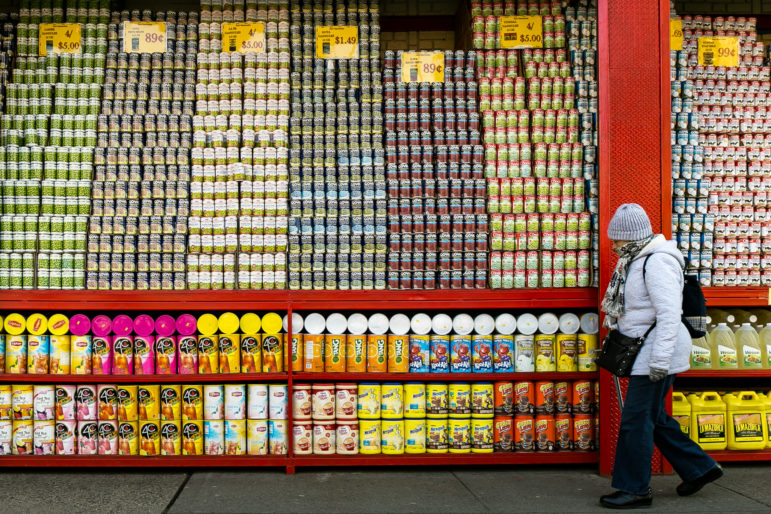
A supermarket in Inwood.

This holiday season, tens of thousands of low-income New Yorkers could go without food stamps amid a staffing shortage at the city’s social services agency—and state officials with the power to ease the bureaucratic crisis have so far declined to take action.

Over half of New York City food stamp applicants are left waiting for the crucial benefits as staff at the city’s beleaguered Human Resources Administration (HRA)—down 20 percent of its workforce and facing a fresh round of budget cuts ordered by Mayor Eric Adams—struggle to process documents and issue approvals. As City Limits has reported, the delays have forced parents to pawn jewelry, take out loans or incur mounting credit card debt to feed their children, and the problem is only getting worse

HRA is supposed to review applications and electronically deliver food stamps, formally known as Supplemental Nutrition Assistance Program (SNAP) benefits, within 30 days. That timely processing rate, considered a “critical indicator” of agency performance in the annual Mayor’s Management Report, has plummeted from about 92 percent in fiscal year 2021 to just over 60 percent last year to now 46.3 percent, officials said.

HRA has requested a waiver from the state that would temporarily suspend recertification requirements for food stamp recipients so that agency staff can tackle the massive backlog of new applications, including 50,000 in October alone. But New York State’s Office of Temporary and Disability Assistance (OTDA) has declined to relax the rules, even after issuing a similar waiver in the early days of the COVID pandemic, when tens of thousands of newly unemployed New Yorkers began applying for food stamps. 

OTDA, run by the city’s former social services deputy Daniel Tietz, said it does not trust HRA to process the applications correctly, putting the state at risk of penalties and lost federal funding. 

OTDA spokesperson Anthony Farmer said the agency won’t step in until HRA staffs up (HRA had more than 2,600 vacant positions as of Oct. 31, according to records shared with City Limits last month by the city’s Independent Budget Office).

“We are committed to working with New York City to help them overcome the processing issues they continue to encounter,” Farmer said. “This assistance, however, requires the city to take proactive steps to ensure they have adequate staff on-hand to process applications in a timely manner and in accordance with long-standing federal standards.”

The federal government audits a sample of SNAP applications to ensure approved households are not receiving a higher-than-allowed amount based on their income. Roughly 1.7 million New York City residents in about 1 million households receive some food stamps, with values varying by income and family size.

Attorneys and case managers working with food stamp applicants who are forced to wait for their benefits say that OTDA’s reasoning makes no sense when New Yorkers are suffering.

“It seems like the state is more concerned about the error rate than about hundreds of thousands of people not eating because of the delays,” said Adriana Mendoza, benefits supervisor at the Safety Net Project of the Urban Justice Center. “The city is in crisis, and while they must take responsibility for fixing this, the state denying the waivers is not helping.”

Gov. Kathy Hochul announced Wednesday that the state would use federal funds to increase food stamp amounts for all recipients, but Mendoza said that will have little immediate impact for families who are cut off or left waiting for the benefits to arrive. 

Kathleen Kelleher, a staff attorney in the Legal Aid Society’s Civil Law Reform Unit, said she found the state’s response to the crisis “shocking.” 

“We’re talking about benefits for real people,” Kelleher said. “I don’t think it’s reasonable for them not to intervene.”

At a Dec. 15 City Council hearing, Kelleher said she has been working with food stamp recipients for more than 30 years and has never seen the same magnitude of delays. She urged OTDA to issue the recertification waivers, create a corrective action plan for HRA and publish specific data on new applicants, recertifications and delays across New York City and state.

“If they’re not issuing these 100 percent-federally-funded benefits, then they are messing up New York City’s recovery from COVID,” she said. “Low-income workers rely on SNAP for their survival. People need their benefits now.”

The city’s Department of Social Services, which oversees HRA, said it will continue to work to process “a record number” of SNAP applications, even without state assistance to ease the workload.

“We are using every tool at our disposal to continue to effectively support vulnerable New Yorkers who are still very much reeling from the economic impact of the pandemic,” a spokesperson said, adding that the agency would “welcome the State’s input on helping identify joint solutions as part of our shared mission to serve and support New Yorkers every which way we can.”

SNAP is considered the country’s most vital anti-hunger program, providing support to about 41.5 million participants in 2021. The program also has an important economic impact because recipients typically spend the benefits at local grocers. 

Food stamps are deposited onto a debit card that recipients can use to purchase food at grocery stores, bodegas and farmers markets. Applicants already approved for SNAP benefits have to recertify them at regular intervals, and processing delays mean households can abruptly lose access to funds they rely on. 

That has often been the case for a father of seven children in Midwood named Simon, who asked not to use his last name for fear of judgment by neighbors in his conservative, tight-knit community. He said he is forced to submit the same documents over and over again to prove his family’s eligibility.

“What is this business of constantly showing the same birth certificates and social security information every six months? What is the point,” he said. “I don’t get different kids every six months. They put everyone through hell. It’s a waste of time, it’s a waste of resources and it doesn’t accomplish anything.”

Simon, a freelance artist, said the recertification requirements are overly punitive for New Yorkers trying to make ends meet. 

“I’m not doing this because I want to do this. I have no choice,” he said. “People on this program need the help and aren’t getting the help.” 

Bronx resident Bianca Herrera, 26, said she spent more than a year trying to get her family’s food stamps back after an HRA administrative error cut them off. Herrera, a single mother with two young daughters, said she repeatedly tried to recertify but was ignored until Safety Net Project case managers helped her get her benefits back. 

Adi Talwar

Bianca Herrera said she spent more than year trying to get her family’s food stamps recertified.


“That all took a toll on me. It was truly devastating wondering how I was going to be able to buy food every day,” she said. “That was a constant worry. It was insane.”

Several city, state and even federal lawmakers have begun to seek resolutions to the administrative crisis at HRA. U.S. Sen. Kirsten Gillibrand told City Limits she was “very concerned about the thousands of New Yorkers who are waiting for their SNAP benefits to come through.” 

“This is a safety net program that’s meant to help people and improve their lives and people should not be forced to sell treasured valuables in order to feed their families,” she said in a statement. She added that her office is working with the United States Department of Agriculture (USDA), which runs SNAP, to “expedite the process, and help these families get the funds to put food on their table.”

The United States Department of Agriculture, which runs SNAP, said it was up to OTDA to issue recertification waivers. 

Another problem is compounding the situation for low-income New Yorkers: Roughly 4,000 SNAP recipients have had their benefits stolen through skimming devices placed on card readers. 

In a letter to Tietz on Thursday, Assembly Social Services Chair Linda Rosenthal and Assemblymember Marcela Mitaynes urged OTDA to take aggressive action to reimburse the victims of the food stamp theft, and to relieve the administrative burden on HRA.

“With the rise of benefit theft and extreme delays in the processing of SNAP applications, it has become abundantly clear that the New York City Human Resources Administration is not equipped to manage these crises,” the two assemblymembers wrote. “[We] hope to see OTDA take quick action, as other states have done, to provide support to families in need.”


tiktok coins free tiktok coins free 2023 tiktok coins free generator tiktok unlimited coins

City Limits’ Most-Read Housing Stories in 2022

It’s been an eventful year in New York City housing. Mayor Eric Adams launched a new plan for housing production and a controversial approach to street homelessness. At the same time, the city’s homeless shelter population reached historic highs this year, fueled in part by an increase in migrants from the southern border and by soaring rent costs, including the biggest price hike for rent-stabilized apartments in nearly a decade.

Bronx tenant and her two children in her apartment kitchen
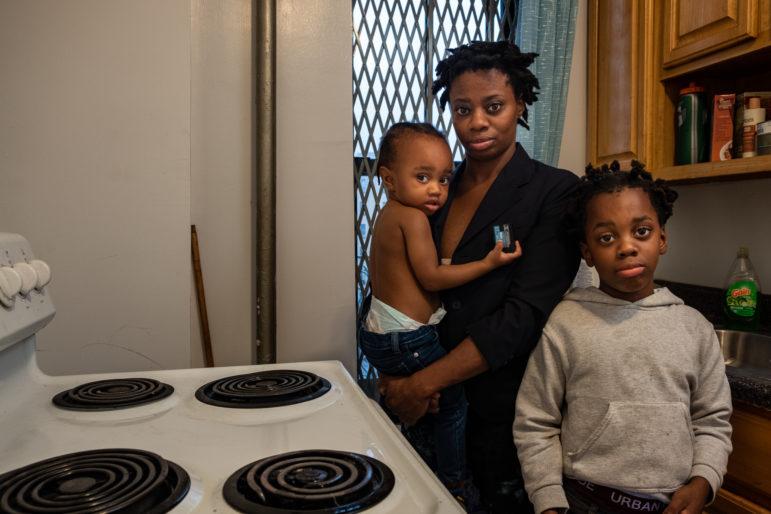
Choice Scott in her kitchen with her children in their former supportive housing apartment in The Bronx, pictured here in February 2022. Scott is one of thousands of tenants living in the city’s network of “scattered site” supportive housing, many of whom endure poor housing conditions.


It’s been an eventful year in New York City housing. Mayor Eric Adams took the helm of City Hall at the start of the 2022, launching a new plan for housing production and a controversial approach to street homelessness. The city’s homeless shelter population reached historic highs this year, fueled in part by an increase in migrants from the southern border and by soaring rent costs, including the biggest price hike for rent-stabilized apartments in nearly a decade.

As City Limits looks to expand our coverage of New York City housing and homelessness in the year ahead, we’re looking back at 2022. Below are the 10 most-read housing stories we published over the the last 12 months.

What should we cover in 2023? Send story tips here.

City Limits’ Most-Read Housing Stories in 2022

10. NY Lawmakers Propose $250M to Launch Section 8-style Rent Subsidy

During budget negotiations this spring, lawmakers in the State Senate and Assembly included a quarter of a billion dollars to fund the Housing Access Voucher Program (HAVP), which would provide a new rent voucher for New Yorkers experiencing homelessness or at risk of homelessness, including undocumented immigrants. Though both progressive tenant organizations and landlord interest groups supported the legislation, Gov. Kathy Hochul declined to fund it in the final budget deal and the bill failed to pass during the legislative session that wrapped up in June. But housing advocates are still pushing to revive HAVP in 2023, with more than 80 organizations signing a letter to the governor this month urging her to establish and fund the program, which would cover a portion of a participant’s rent up to 30 percent of their household income.

9. Hochul, Lawmakers Look to Override NY’s Exclusionary Zoning Amid Housing Crunch

In the never-ending YIMBY vs. NIMBY debate, accessory dwelling units (ADUs) took center stage in 2022, including in the primary for governor. Gov. Kathy Hochul backed a plan to legalize ADUs—extra apartments in basements, attics or garages—in lots zoned for single-unit homes. Supporters say the move would ease the state’s affordable housing shortage and help address decades of exclusionary zoning rules rooted in racism and segregation. But the plan was vehemently opposed by Hochul’s more moderate democratic rival in the primary and her Republican competitor in the general election, both of whom argued the policy would strip local governments of a say in neighborhood zoning rules.

Nelson Llorens in front of his East New York home on Glenmore Avenue. Developers have regularly approached him and offered to buy his property, he says, though he is holding out for the highest offer he can get.
8. House Flippers Continue to Target East New York. Residents Blame the 2016 Rezoning

House flipping remains rampant in East New York, a transit-rich neighborhood with thousands of two- to four-family homes. Home prices in the predominantly Black and Latino neighborhood began to tick up before then-Mayor Bill de Blasio announced his plans to rezone 190 blocks of East New York in 2014, analyses showed. But affordable housing advocates and local residents say de Blasio’s plan, approved by the City Council in 2016, only drove more investors to scoop up homes, jack up prices and push out existing residents. “Speculators come by every day, every hour,” one community leader said. “They see a lot of poor people on valuable land.”

7. Tracking the Number of People in NYC Homeless Shelters in 2022

Finding out just how many people send each night in a New York City homeless shelter is a complicated question. The city’s Department of Homeless Services publishes a figure daily, but it’s not a complete picture of the system, which is run by four different agencies, most of which have no obligation to publish a daily census. In an effort to more accurately capture the scope of the city’s homelessness crisis, City Limits began tracking population numbers across the various agencies that operate shelter beds—numbers that have grown to record highs this year—and will continue to do so in 2023. Our Shelter Count project was the subject of a feature article in the New Yorker in July.

6. Mayor’s Budget Plan Cuts $615M from Homeless Services, as Subway Crackdown Intensifies

Debate over spending on housing and homeless services dominated the city’s budget negotiations this year. Shelter providers urged City Hall to hire more workers to help move people more quickly into permanent housing, especially as Mayor Eric Adams intensified an initiative to remove homeless New Yorkers from subway cars and public spaces. While the mayor later added $5 billion to the city’s 10-year capital housing plan, his final budget package was still short of the $4 billion a year dedicated to housing he pledged to commit while running for office.

5. East New York Families in Limbo as Developer Plans High Rise to Replace Crumbling Housing Complex
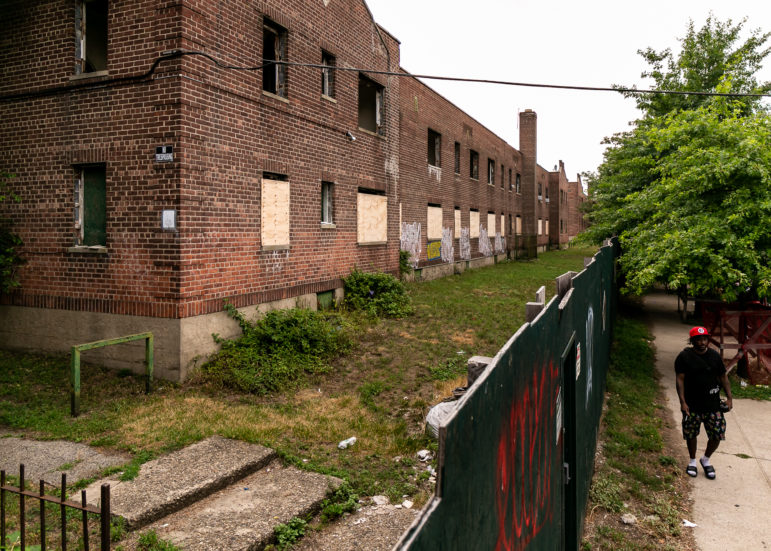
Boarded up windows at Arlington Village in Brooklyn.


This story, produced in collaboration with news site THE CITY, took a look at the Arlington Village apartment complex in East New York, where just six apartments out of hundreds were still occupied this summer as the property owner looks to rezone and develop the site, once a vibrant community that’s now largely boarded up. “It’s discouraging,” one longtime tenant told City Limits this summer. “The way they have the building just abandoned—anything can happen.”

4. As NY’s Eviction Moratorium Nears its End, Will Albany Pass ‘Good Cause’ Bill?

The Good Cause Eviction bill emerged as a key demand of many tenants’ rights advocates this year, while landlord groups launched an aggressive campaign to kill the measure. The legislation would have given tenants in non-rent stabilized apartments some of the same rights as tenants in rent-regulated units: Granting them a lease renewal in most cases, capped rent increases and requiring property owners to prove “good cause”—like nonpayment—to kick them out. Local municipalities across the state, including Newburgh and Kingston, have passed similar measures this year, and the statewide version is likely to once again be the center of legislative debate in Albany in 2023.

3. ‘It’s Like a Slum’: Supportive Housing Tenants Cope with Violation-Filled Homes. Provider Blames Underfunding

Egregious, unsafe conditions plague New York City’s network of scattered-site supportive housing, where nonprofit providers with government contracts rent units in privately-owned buildings and sublease them to formerly homeless New Yorkers with mental illness, HIV/AIDS and other special needs. They include Postgraduate Center for Mental Health, which receives millions of dollars in contracts from the state to operate around 540 units of scattered-site supportive housing. City Limits identified 32 buildings where Postgraduate Center rents these apartments and found they accounted for 1,433 open housing code violations as of July 2022, and nearly half of the buildings are owned by people who have appeared on the public advocate’s annual Worst Landlords List. Postgraduate and other providers blame the state’s low contract rates, which they say forces them to rent units wherever they can find them.

Bronx tenant and her two children in her apartment kitchen
Choice Scott in her kitchen with her children in their former supportive housing apartment in The Bronx, pictured here in February.

2. Bronx Rental Complex Must Accept Housing Vouchers, Judge Rules 

This summer, a Manhattan Supreme Court justice sided with a 34-year-old mother of two who sued the owners of roughly 6,300 apartments the Bronx’s Parkchester complex in the eastern Bronx after she was denied an apartment because she did not earn at least $62,000 a year, even though the CityFHEPS voucher she received from the city would cover the full rent. It is a violation of the city’s human rights law for landlords to deny apartments to applicants because they use government subsidies to pay their rent, and the Parkchester decision marked the first time a New York court has ruled that minimum-income policies for people with full-rent subsidies violate city and state laws, said Housing Works senior attorney Armen Merjian, who represented the family in the lawsuit.

1. NYC’s New Housing Voucher Rules Will Drastically Expand Income Eligibility for Renewals

In October, the city approved a new rule that enabled New Yorkers who receive CityFHEPS rental assistance to hold onto their housing vouchers after five years if they earn up to 80 percent of Area Median Income—currently $66,880 for an individual or $85,920 for a family of three. The decision marks a significant adjustment to a new law that increased the value of CityFHEPS vouchers but capped renewal eligibility at 250 percent of the federal poverty line—equal to just $32,200 for a single adult and just under $55,000 for a family of three. That strict income cap would lead to problems down the road, advocates argued, forcing families to choose between a job that pays a living wage or their housing voucher. “It’s a really, really, really big win,” Sarah Wilson, an organizer with the Urban Justice Center’s Safety Net Project, said of the October rule change to prevent that. “You can take a job that pays $20 an hour and not risk losing your housing.”


tiktok coins free tiktok coins free 2023 tiktok coins free generator tiktok unlimited coins

Labels:

Thursday, December 22, 2022

10 Ways to Utilize ChatGPT for Improved Communication and Productivity

Discover the numerous ways you can use ChatGPT to improve communication and productivity. From generating creative writing prompts to creating personalized chatbot responses, ChatGPT is a versatile tool that can be utilized for a variety of purposes. Learn how to get the most out of ChatGPT with these 10 tips.

1. Generate Creative Writing Prompts: ChatGPT can be used to generate unique and interesting writing prompts for fiction, poetry, or even non-fiction. Simply input a few keywords or a theme, and ChatGPT will suggest a prompt for you to use as inspiration for your next piece of writing.

2. Create Personalized Responses To Customer Inquiries: ChatGPT can be used to create automated responses to common customer questions or inquiries. Simply input a few examples of common customer questions and ChatGPT will generate responses that can be used to help save time and improve customer satisfaction.

3. Generate Social Media Posts: ChatGPT can be used to generate content for social media platforms. Simply input a few keywords or themes, and ChatGPT will suggest a variety of social media posts that can be used to engage your audience and promote your brand.

4. Translate Text: ChatGPT can be used to translate text from one language to another. Simply input the text you want to translate, along with the target language, and ChatGPT will generate a translation that can be used for a variety of purposes.

5. Generate Product Descriptions: ChatGPT can be used to generate unique and engaging product descriptions for e-commerce websites. Simply input a few details about the product, and ChatGPT will suggest a variety of product descriptions that can be used to entice customers and drive sales.

6. Create Personalized Emails: ChatGPT can be used to create personalized emails for a variety of purposes. Simply input a few details about the recipient and the purpose of the email, and ChatGPT will suggest a variety of email templates that can be used to make your communication more effective.

7. Generate Marketing Copy: ChatGPT can be used to generate marketing copy for a variety of purposes. Simply input a few details about your product or service, and ChatGPT will suggest a variety of marketing copy that can be used to promote your brand and drive sales.

8. Write Dialogue for Characters: ChatGPT can be used to write dialogue for characters in a story or script. Simply input a few details about the characters and the context of the conversation, and ChatGPT will suggest a variety of dialogue options that can be used to bring your characters to life.

9. Generate Song Lyrics: ChatGPT can be used to generate song lyrics for a variety of genres. Simply input a few details about the theme and style of the song, and ChatGPT will suggest a variety of lyrics that can be used as inspiration for your next musical creation.

10. Create Personalized Chatbot Responses: ChatGPT can be used to create personalized responses for chatbots. Simply input a few examples of common chatbot inquiries and ChatGPT will generate responses that can be used to improve the user experience and make your chatbot more effective.

Overall, ChatGPT is a powerful tool that can be used for a wide range of purposes. Whether you’re looking to generate creative writing prompts, create personalized responses to customer inquiries, or generate marketing copy, ChatGPT can help you save time and improve the effectiveness of your communication.

7 Proven Strategies for Making Money Online in 2023

There are many ways to make money online in 2023, and the opportunities are constantly evolving as technology and the internet continues to change.

Here are a few potential options to consider:

1. Freelancing: If you have a particular skill or expertise, you can offer your services as a freelancer. This can include writing, graphic design, web development, social media management, and more. You can find freelance work on platforms like Upwork, Fiverr, and Freelancer.com.

2. Online Tutoring or Teaching: With the increase in remote learning and online education, there is a growing demand for online tutors and teachers. You can offer your services on platforms like Chegg, and Tutor.com, or create your own website to offer private tutoring.

3. Selling Products or Services Through an E-commerce Platform: If you have a product or service that you can sell online, consider setting up an e-commerce store. You can use platforms like Etsy, eBay, or Amazon to reach a wider audience and start making money.

4. Blogging or Creating Content: If you have a passion for writing or creating content, you can start a blog or YouTube channel and monetize it through ads, sponsorships, or selling products or services.

5. Affiliate Marketing: If you have a large following on social media or a popular blog, you can make money by promoting products or services as an affiliate. You’ll earn a commission for each sale made through your unique referral link.

6. Online Surveys and Paid Focus Groups: There are a number of websites and companies that pay people to take online surveys or participate in focus groups. This can be an easy way to make some extra money, but the pay can vary greatly.

7. Renting Out a Spare Room on Airbnb: If you have a spare room in your home, you can make money by renting it out on Airbnb. This can be a great way to make some extra cash, especially if you live in a popular tourist destination.

NOTE: It’s important to note that making money online requires effort and dedication. While some of these options may provide a passive income, most will require some level of ongoing work to maintain and grow. It’s also important to do your research and be cautious of any scams or schemes that promise easy money without any effort.

How Elon Musk Makes And Spends His $300 Billion Dollars

Elon Musk is a well-known entrepreneur and businessman who has made a significant impact in various industries, including technology, energy, and transportation.

He is the CEO of SpaceX and Tesla, and he has also co-founded companies such as Neuralink and SolarCity. Throughout his career, Musk has amassed a significant fortune, which he has used to fund his various business ventures and charitable causes.

One of the primary sources of Elon Musk’s wealth is his role as CEO of Tesla, an electric vehicle and clean energy company. Musk has been with Tesla since its inception in 2003, and he has played a key role in the company’s growth and success.

Tesla’s market value has soared in recent years, and the company is now worth billions of dollars. In addition to his salary as CEO, Musk also holds a large number of Tesla shares, which have greatly contributed to his wealth.

Another source of Musk’s wealth is SpaceX, the aerospace manufacturer and space transport services company that he founded in 2002.

SpaceX has made significant progress in the development and deployment of reusable rockets, and it has signed contracts with numerous government agencies and private companies to launch payloads into space. Musk also serves as CEO of SpaceX, and the company’s success has greatly contributed to his net worth.

In addition to his roles at Tesla and SpaceX, Elon Musk has also co-founded and invested in a number of other ventures. One such company is Neuralink, which is working on the development of implantable brain–machine interfaces.

Musk has also invested in SolarCity, a solar panel manufacturing and installation company, and The Boring Company, which is developing tunnelling and transportation technologies. These investments, along with his salaries and equity in these companies, have also contributed to Musk’s wealth.

Elon Musk is known for using his wealth to fund various business ventures and charitable causes. He has made significant donations to organizations such as the XPRIZE Foundation, which promotes innovation and problem-solving through competitions, and the Musk Foundation, which focuses on philanthropic efforts in the areas of science, engineering, and renewable energy.

Musk has also donated to educational institutions, including his alma mater, the University of Pennsylvania. In addition to his charitable donations, Elon Musk has also used his wealth to fund his various business ventures, including Tesla, SpaceX, and Neuralink.

He has invested heavily in the research and development of new technologies, and he has taken on significant financial risks in order to bring his ideas to fruition. Musk has also used his wealth to hire talented employees and to secure funding for his companies through partnerships and investments.

Despite his successes, Elon Musk has faced challenges and setbacks in his career. He has faced criticism and legal battles, and some of his ventures have struggled financially. However, Musk has remained determined and has continued to push forward with his ideas and ambitions.

In conclusion, Elon Musk is a highly successful entrepreneur and businessman who has made a significant impact in various industries. His wealth has come from his roles as CEO of Tesla and SpaceX, as well as his investments in other ventures such as Neuralink and SolarCity.

Musk has used his wealth to fund his business ventures and charitable causes, and he has taken on significant financial risks in order to bring his ideas to fruition. Despite facing challenges and setbacks, Musk has remained determined and has continued to make a difference in the world through his innovative thinking and philanthropic efforts.

How Tony Elumelu Makes And Spends His $700 Million Dollars

Tony Elemelu is a Nigerian businessman and philanthropist known for his successful ventures in various industries including banking, real estate, and telecommunications.

He is the founder and chairman of Heirs Holdings, a pan-African conglomerate with interests in energy, real estate, healthcare, and financial services. Element is also the founder of the Tony Elemelu Foundation, a non-profit organization that supports entrepreneurship and empowerment initiatives in Africa.

Elemelu’s journey to success began with his education. He received a bachelor’s degree in economics from the University of Lagos and later earned an MBA from Harvard Business School.

After completing his studies, Elemelu began his career as a banker and quickly rose through the ranks to become the Managing Director of the United Bank for Africa (UBA).

Elemelu’s success in the banking industry laid the foundation for his later ventures. In 2010, he founded Heirs Holdings, which has since become one of the most successful and respected conglomerates in Africa.

The company has a diverse portfolio of investments and has made significant contributions to the development of various sectors on the continent.

Elemelu’s wealth has also allowed him to pursue his philanthropic interests. In 2010, he founded the Tony Elemelu Foundation, which has supported the development of entrepreneurship and empowerment initiatives in Africa.

The foundation provides training, mentorship, and funding to aspiring entrepreneurs, with a focus on helping young people start and grow their own businesses.

In addition to his business and philanthropic pursuits, Elemelu is also known for his involvement in politics and public service. He has served on various boards and committees in Nigeria, including the Presidential Advisory Council on Investment and the National Council on Privatization.

So, how does Tony Elemelu make and spend his money?

Elemelu’s wealth is primarily derived from his successful business ventures, including Heirs Holdings and its portfolio of investments. He also generates income from his involvement in various board positions and advisory roles.

Elemelu is known for his philanthropic efforts and has donated significant amounts of money to various causes, including education, healthcare, and entrepreneurship.

Through the Tony Elemelu Foundation, he has supported the development of entrepreneurship and empowerment initiatives in Africa, providing training, mentorship, and funding to aspiring entrepreneurs.

In addition to his philanthropic pursuits, Elemelu also spends his money on luxury goods and experiences.

He is known to enjoy travelling and has been spotted vacationing in various locations around the world. Elemelu is also a collector of luxury cars and has been seen driving a range of high-end vehicles.

Overall, Tony Elemelu is a successful businessman and philanthropist who has made a significant impact in various industries and sectors in Africa.

Through his hard work and determination, he has built a successful career and a significant personal fortune. He has also used his wealth to support various causes and initiatives that aim to empower and uplift communities on the continent.