We just returned from a week at the shore in southwest France, where the beaches are vast, the waves are impressive and the food is fantastic. One of the specialties I most love in that corner of the world is squid grilled with garlic and parsley. The squid are cooked using a method the French call aller-retour, or back and forth, a phrase most commonly seen on round-trip tickets. In culinary usage, the phrase means that the food is placed on an extremely hot grill and cooked very quickly on one side (aller) and then the other (retour).
This dish, a Basque specialty, can be found on both sides of the nearby border with Spain, and similar versions abound around the Mediterranean. It is popular at cocktail hour, generally served with a crisp white wine, and may also be served as a starter or a main course. The key is obtaining the right kind of squid — neither too small nor too large — and that can be tricky, even in France, where the name changes according to region.
In the southwest, smallish squid, no larger than the size of a hand excluding the tentacles, are known as chipirons, a relative of the Spanish word chipirones. Moving north, the very same squid are called encornets, deriving from the horny (corné) nature of their cartilage (backbone). In Provence in the southeast, the identical squid are called supions, deriving from the Latin word sepia, or ink. Clear across France, squid, especially the larger ones, are also known as seiches, deriving from sepia, and calmars, akin to Italy’s calamari.
This dish can be prepared in just 10 minutes if you have the squid cleaned by the fishmonger before getting started. You have only to chop the squid, garlic and parsley, heat your skillet and perform a quick aller-retour. When researching this post, I learned that there’s a season for squid, which begins in August and runs through February, at least over here. The height of the season is September…
Some days you just need comfort food — so why not make an apple strudel? This delightfully flaky dessert has been popular in France since it was introduced at Versailles by Marie-Antoinette, who came here from her native Austria after marrying the future Louis XVI. It is exceptionally easy to make these days thanks to the availability of filo dough, which eliminates the painstaking step of stretching out kneaded dough until it is paper thin.
Marie-Antoinette would have enjoyed other types of strudel when growing up in Vienna. Strudels filled with soft cheese, sour cherries and poppy seeds were all popular at the time. The pastry, defined by its rolled-up shape (strudel translates as ‘whirlpool’), can also be filled with meat or vegetables. It is said to derive from Turkey’s baklava, which entered Austria during the Ottoman occupation. It has many cousins, among them savory cheese pies like Greece’s tiropita, itself a variety of southeast Europe’s borek (watch this space).
You may be wondering whether strudel was what Marie-Antoinette had in mind when, upon being told that the peasants had no bread, she said ‘Let them eat cake’ — words reputed to have helped spark the French Revolution. Although whether she actually said this is far from sure, what is certain is that the phrase has nothing to do with strudel. In French it’s ‘qu’ils mangent de la brioche‘ (rough translation: ‘let them eat egg bread’).
Things didn’t end well, of course, for Marie-Antoinette, who lived a life of opulence and splendor only to be arrested, imprisoned and finally guillotined in public at the Place de la Révolution, today’s Place de la Concorde. Such are the risks of power when it is abused — glitz and wealth offer no protection. As we endure this bleak January, with or without strudel, we can take comfort in imagining that this may still hold true today.
When the weather turns summery, what could be more refreshing than a Greek salad, French style? It’s been so hot here in Paris recently that I’ve made several. All you need is feta, tomatoes, a cucumber, a red onion, some black olives and a little parsley or mint. Unlike the Greek version, salade grecque is generally served in France without sweet peppers or oregano, and with rosé instead of retsina. Call it an Adriatic of the mind.
When researching this post, I got to wondering why this particular combination is known as Greek salad, when there are many salads in Greece, my favorites (other than the above) being taramasalata, known in France simply as tarama, made of salted cod roe, oil and bread, and tzatziki, made of cucumbers, yogurt and garlic. I didn’t find the answer, but I did find quite a bit about one of the main ingredients of salade grecque, the cucumber.
It turns out that cucumbers came to Greece, and then on to the rest of Europe, from the foothills of the Indian Himalayas, where they grow in the wild. One thing that surprised me when I got to France was the shape of cucumbers here — they are smooth and very long, about 16 inches (40 centimeters), quite unlike the shorter, nubbly cucumbers I had encountered in the United States. One can only speculate on why the French prefer the longer variety, which, oddly, is known here as hollandais (Dutch). Suffice it to say that other varieties have begun appearing at Parisian farmer’s markets and grocery stores, including the suddenly popular short cucumber known as libanais (Lebanese).
Cucumbers were enjoyed in ancient Egypt, where they are said to have been popular with the Hebrews brought there as slaves. Le concombre had arrived in France by the Middle Ages, and was favored by Charlemagne, who instructed monasteries to cultivate the fruit (yes, it’s a fruit, not a veggie). By the 17th century it had risen to cult status among the well-heeled, who appreciated the fact that, unlike peasant food, cucumbers were not at all filling and therefore could be considered a pleasure food. According to one French historian of food, cucumbers were even viewed as useful in the art of seduction…
Getting back to the present day, one delightful thing about Greek salad, French style, is that it can be prepared in advance and refrigerated. It stays crisp if you wait to add the vinaigrette until just before serving. This salad can be served as a main dish at lunchtime or as a starter in the evening, followed perhaps by grilled brochettes of lamb or chicken (coming soon), or — if you’d really like to conjure up the seaside — grilled squid with garlic and parsley or Mediterranean-style fish with tapenade.
Other hot-weather suggestions can be found in the Menus section, which I update from time to time according to season. Off the top of my head, summer meals could include: salade niçoise, aïoli (fish and veggies with garlic mayonnaise), assiette de crudités (veggie platter), assiette anglaise (cold roast meat platter), ratatouille, eggplant gratin or cucumber soup. The main idea being to spend less time in the kitchen than at the beach.
You can find quiche lorraine in virtually any bakery or deli in France, but it is even better when made at home. The rich filling of eggs, milk cream, bacon and cheese fluffs up in the oven to marry delightfully with a buttery homemade crust. Served with a crisp white and a salad of tender leaves alongside, it makes a fine lunch dish or a great starter at suppertime. If you cut it into little squares, you can also serve it with drinks at cocktail hour.
Unsurprisingly, this quiche hails from the Lorraine region of northeast France. It has gone through many permutations over the centuries, the most recent of which is the addition of cheese. Purists may tell you there should be no cheese at all in a quiche lorraine, and they would be right, historically speaking. But cheese, which deepens the flavor, is often included these days. For the record, the great chef Paul Bocuse includes cheese in his quiche lorraine recipe, and that’s a good enough recommendation for me.
Another difference from years gone by is the crust. Nowadays, quiche lorraine typically uses a pâte brisée, or savory crust. But when they first started making this dish in Lorraine, back in the 16th century or perhaps even earlier, the filling was encased in bread dough and the quiche was baked in communal village ovens on baking day — a convenient way for home bread bakers to use up any leftover dough.
These days, cubed ham is sometimes used instead of bacon, and the bacon itself is sometimes included in the filling uncooked (although I wouldn’t suggest that). Quiche lorraine is often sold in individual portions, made in tart pans about 4 inches (10 cm) wide, and if you have pans that size you can make about six from this recipe.
Lorraine lies close to Germany, separated only by Alsace, and the culinary roots of quiche are evident in its name. It derives from the German word kuchen, meaning cake, which in French came to be pronounced kichen (KEY-shen) before morphing into the present-day quiche (keesh). The dish bears some resemblance to the Alsatian dish flammekueche, aka tarte flambée, a fine-crust tart with bacon.
You can take a shortcut to making this quiche by using store-bought pie dough. But if you have the time and the inclination, make the dough yourself. It is far superior, and your guests or family will appreciate it. Happy cooking.
There’s an easy way and a hard way to make the delectable French strawberry dessert known as charlotte aux fraises, as I learned when setting out to make one for this post. A charlotte is an unbaked cake of ladyfingers with a creamy filling. Many modern recipes for strawberry charlotte use a thick dessert cream known as a bavaroise for the filling, and this involves the use of gelatin. As it turns out, that’s the hard way…
My first attempt failed utterly when the gelatin didn’t set properly. The cake was beautiful when I unmolded it — for about 10 seconds. Then it proceeded to collapse into a Daliesque mound of strawberry cream. My daughter pronounced it delicious, but still…
The easy way, as I discovered by calling a couple of French friends who gave me their grandmother’s recipes, is to skip the gelatin and simply layer quartered strawberries mixed with whipped cream into a mold lined with ladyfingers dipped in crème de cassis. Well, the cassis was my idea. Traditionally rum is used as flavoring. And this method is also the traditional one, passed along from mother to daughter over the generations.
Because the easy way is so easy, the dessert is fun to make. If kids will be sharing it, you can skip the cassis and use strawberry syrup for flavoring the ladyfingers. Once assembled, the charlotte needs to be refrigerated for at least four hours, after which you can decorate it with sliced strawberries and mint. And no, the second time, it didn’t collapse…
The Carrières de Lumières in Les Baux-de-Provence is one of the area’s top tourist attractions. It’s a totally immersive sound and light show with a cultural purpose. Recent shows have explored the work of artists like Picasso, Chagall and Van Gogh.
It has been such a success that a sister site has opened in Paris, the Atelier des Lumières, and it’s one of the hottest tickets in town. Don’t miss it if you travel to Paris!
Read all about this great new Paris attraction in Frenchly.
She was the most powerful woman in 16th-century Europe, ruling France for nearly 20 years. She brought haute cuisine to the country, created the Tuileries Garden in Paris, and was responsible for one of the bloodiest massacres in French history. People thought she was a sorceress who murdered her enemies. Her name is Catherine de Medici and she was one tough lady.
St Rémy de Provence is where my wife and I live part of the year and it’s one of the most charming towns in Provence. Nestled at the foot of the Alpilles Mountains and surrounded by vineyards and olive groves, it’s a great place to spend a few days. I’ve put together a list of some of my favorite things to do while you’re in town.
Provence shares many Christmas traditions with the rest of France, like sapins de Noël (Christmas trees) and Pére Noël (Father Christmas.) But it also has some unique ones of its own.
One is the santons, those cute little figurines sold all over Provence. They depict characters from village life such as the baker, the fishwife and the scissor grinder. They are popular with tourists, kind of like Hummel figurines but with a French twist. And their origin goes back to the French Revolution.
Crèches (nativity scenes) had long been popular in France but were banned by the fiercely anti-clerical leaders of the Revolution. What to do? An artist from Marseille came up with a clever solution. He invented santons and turned the crèche into a “village scene,” using his little figurines in place of the usual Biblical characters. This passed muster with the anti-religious zealots, who somehow missed the fact that santon means “little saint,” and a new tradition was born.
Another Provencal Christmas specialty is le gros souper (the big dinner) eaten before midnight Mass on Christmas Eve. It is full of religious symbolism, like the three white tablecloths representing the holy trinity and the seven dishes representing Mary’s sorrows. It also requires a great deal of preparation, so fewer families today have this big dinner than in years past.
Perhaps the most famous Provence Christmas tradition is the treize (thirteen) desserts. Wait, thirteen? Yes!
These are eaten after midnight Mass, which means in the wee hours of Christmas—what a great way to start the day! Like the gros souper, the treize desserts are full of religious symbolism. Thirteen, for example, represents the number of people at the Last Supper.
Each family can decide what to serve but the desserts usually include fruits and nuts, candies and some sort of sweetened bread. My favorites are the two kinds of nougat, one white and one black, symbolizing good and evil.
Like the gros souper, fewer families prepare the treize desserts today than in the past but they maintain a loyal following. Some people just skip the dinner and the Mass and go straight to the desserts!
So at your Christmas dinner this year, when you are debating whether to have another slice of pie—go for it! Just tell your family that you are taking part in an ancient and noble French tradition.
My new book is out! Are We French Yet? is available atAmazon!
This coming Saturday, May 22, could be a red-letter date for the French language, because that’s when the winner of the Eurovision Song Contest will be announced.
Two of the favorites — France and Switzerland — are both represented by acts singing in French. Another favorite, Malta, has a song with a French title. Is French having a moment?
For those of you not familiar with Eurovision, it’s a continent-wide song contest that goes back to the 1950s. Each country selects an act, which performs an original song, and the winner is chosen via a complicated voting system. Hundreds of millions of viewers tune in to the Eurovision Finals, making it the Olympic Games of music.
Besides normal songs performed by normal singers, Eurovision has a long tradition of kitsch. Who can forget the Bearded Lady? Or the dancing gorilla? Or my favorite, the man running inside a hamster wheel?
Learn more about this year’s Eurovision and see videos of some of the best acts inFrance Today!
French universities fare poorly in world rankings. In 2019, for example, the country’s highest-ranked university came in at a mere #37. This was below schools in the US, UK, Switzerland, Canada, Japan, and even Denmark. Why is this?
The best-known ranking is the Academic Ranking of World Universities. It considers a number of factors, including the number of Nobel laureates a university has, the number of papers it has published in prestigious scientific journals, and how many highly-cited researchers it has.
These criteria have attracted a number of criticisms. First, while a university’s primary mission is to teach, the quality of teaching isn’t considered. Second, the liberal arts are barely noticed, with most emphasis placed on the sciences and particularly the hard sciences like physics. This results in rankings based on unbalanced criteria.
Despite these limitations, France has reacted, and in 2021 its top university shot up to #14. How did they do it? Find out in My French Life!
Last year, Val served canned meat for Thanksgiving dinner. You might think this horrified our guests, but in fact it was a big hit. That’s because the canned meat was French confit de canard (duck leg confit) and it was delicious.
We have always loved confit de canard but Val pooh-poohed the idea of getting it out of a can. We would see it at our weekly market in St-Rémy-de-Provence and she would turn up her nose and say it was better at our local butcher.
But then one day we had French friends visit us in California and they brought a canas a gift. We had it for dinner (so easy!) and it was a revelation, as good as in a top French restaurant. And don’t tell our St-Rémy butcher, but it was better than his.
Val and I love to bike in Provence, but we’re not fanatics or anything. Flat routes are just fine with us, and one of our favorites is in the Luberon Valley.
It’s what is known as a voie verte, or greenway, and is built where there used to be railroad tracks, so it is nice and flat.
There is a lot to see along the way, besides the stunning natural beauty. You pass a cute little train station (no longer in use), and just beyond it is a Neolithic burial chamber you can explore. Further on is a 2,000 year old Roman bridge that was still used by cars until a few years ago! It’s a great spot for a picnic.
If you are feeling ambitious, you can go off the voie verte and puff up a hill to one of our favorite cafés, with fabulous views across the valley.
France has the largest Jewish population in Europe and the third largest in the world after Israel and the United States. Half of French Jews live in and around Paris, in neighborhoods like the Marais, Belleville and Le Sentier. The city is home to more than a dozen synagogues, including the magnificent Grand Synagogue.
While Paris is the center of Jewish life in France today, this wasn’t always the case. For centuries, that center was Provence. And the Jews there had a surprising and powerful protector: the Pope.
Read all about the history of Jewish Provence in France Today!
Initiées il y a tout juste quinze ans par le regretté Jacques Brion, figure emblématique de la communauté française décédée en 2021, les French Weeks font leur grand retour à Miami, après deux ans d’interruption. Orchestré par la Chambre de commerce franco-américaine de Floride (FACC), ce festival met à l’honneur le savoir-faire hexagonal dans la métropole floridienne à travers la gastronomie, l’art ou encore la culture. Cette nouvelle édition, qui se déroulera du jeudi 10 au jeudi 17 novembre, réunira Français et francophiles pour une dizaine d’événements dans différents lieux.
Rencontre avec le nouveau consul
Les French Weeks débuteront avec un cocktail d’ouverture qui se tiendra dans les jardins de la résidence consulaire (jeudi 10 novembre de 6pm à 8pm). Vous aurez notamment l’opportunité de rencontrer Raphaël Trapp, le consul général de France à Miami, qui a pris possession de ses nouveaux quartiers sur Brickell Avenue en septembre dernier. Les occasions de trinquer seront également nombreuses lors d’une dégustation de champagne concoctée à Villa Azur à Miami Beach (dimanche 13 novembre de 6:30pm à 8:30pm).
Les bibliophiles ont rendez-vous sur la terrasse de l’établissement Paul à Miami Beach pour un événement littéraire organisé en partenariat avec le réseau Rencontre des Auteurs Francophones (lundi 14 novembre de 4pm à 8pm). Certaines plumes locales, dont Ève-Alice Roustang, Anna Alexis Michel et Tangi Colombel, se prêteront à une séance de dédicace. Les amateurs du cochonnet quant à eux pourront tirer, pointer, et gagner au concours de pétanque mis sur pied à Nikki Beach à Miami Beach (samedi 12 novembre à partir de 12pm).
Business et Nuit Blanche
« Comment créer et développer son entreprise en Floride ? », c’est la question à laquelle tentera de répondre un panel d’experts composé d’avocats, d’experts comptables ou encore d’agents immobiliers locaux lorsdu salon professionnel « Miami Live » qui aura lieu dans les locaux de la FACC (mardi 15 novembre de 8:30am à 12pm).Plusieurs tables rondes autour de différents thèmes comme la notion de métaverse (mercredi 16 novembre à 6:30pm à 8:30pm) ou encore le français des affaires (mercredi 16 novembre de 8:30am à 10am) ponctueront par ailleurs le programme.
Le festival de business-culture prendra fin au Deck at Island Gardens lors de traditionnelle Nuit Blanche™(jeudi 17 novembre de 7pm à 1am), proposée par la société événementielle French & Famous, co-fondée par les Français Éric Even et Cyril Kadouch.
Le Beaujolais Nouveau fêté à l’ambassade de France à DC
La Chambre de commerce franco-américaine de DC organise une soirée « Beaujolais and Beyond Celebration 2022 » le samedi 19 novembre, à partir de 7pm, à l’ambassade de France, dans le quartier de Georgetown.
Avec un menu très français pour accompagner l’arrivée du Beaujolais Nouveau, la Chambre invite les amoureux de la France à envoyer à travers leurs papilles. Le repas sera préparé par Daniel Labonne, chef-exécutif à l’ambassade, des chefs français de Cuisine Solutions, et Hughes Cossard, président et propriétaire de FoodExpression.
Au menu : poulet façon chasseur, chou-fleur et légumes d’automne et gâteau de pomme de terre. En plus du bar qui servira des vins français de nombreuses régions, la soirée sera également musicale. Au programme, Jennifer Bergamot Rose interprétera de célèbres chansons françaises, le duo français Kameleon Beats prendra ensuite la relève, le Crush Funk Brass, un groupe de jazzmen de la Nouvelle Orléans sera également de la partie. DJ Slaya et DJ Dark Fader feront danser les participants sur des musiques françaises et américaines pour clôturer la soirée.
Pourquoi l’anglais n’est-il pas la langue officielle des États-Unis ?
Cela peut en surprendre plus d’un, mais l’anglais (ni aucune autre langue) n’est la langue officielle des États-Unis. Pourquoi ? C’est la question bête de la semaine.
L’Amérique multilingue
Nous sommes en 1780. Le futur président John Adams, alors membre du Congrès continental, propose de faire de l’anglais la langue officielle pour bâtir la nation. Sa proposition était loin de faire l’unanimité, car à cette époque, les Américains parlaient une multitude de langues différentes (les langues des colons comme le français, l’espagnol, l’allemand, le néerlandais ou encore le norvégien, mais aussi les langues indigènes).
« En 1664, quand la colonie du New Amsterdam fut acquise par les Britanniques, dix huit langues étaient parlées sur l’île de Manhattan, sans compter les langues des Amérindiens qui s’élevaient à plus de 500 en Amérique du nord à l’époque, explique James Crawford, auteur de plusieurs ouvrages sur les langues. Grâce à leurs écrits, on sait que des leaders comme Thomas Jefferson était fiers de leur capacité à lire dans plusieurs langues et urgeaient leurs compatriotes éduqués à les apprendre aussi. Mais le bilinguisme voire le trilinguisme semblent avoir été fréquents à l’autre bout de l’échelle sociale, parmi les esclaves et les domestiques, blancs et noirs. Les publicités placées dans les journaux de la mi-XVIIIème siècle faisaient référence à la maîtrise de plusieurs langues comme l’allemand, le français, l’espagnol, l’irlandais et le néerlandais. »
Antidémocratique
Imposer une langue était vu comme antidémocratique et une injure aux libertés individuelles. Selon la linguiste Shirley Brice Heath, le gouvernement considérait la langue était un choix individuel. C’est pourquoi, toujours selon la linguiste, les Founding Fathers ont fait « le choix politique délibéré de ne pas avoir de politique à ce sujet. »
Il ne fait aucun doute que l’anglais est devenu dominant aux États-Unis, mais il est encore aujourd’hui difficile de le rendre officiel, pour les mêmes raisons qu’en 1780. L’American Civil Liberties Union, qui se bat pour les respect des libertés individuelles, argue que cela serait contraire au premier amendement sur la liberté d’expression.
Langue officielle dans 31 États
Même si l’anglais n’était pas la langue officielle au niveau fédéral, il n’empêche qu’elle est adoptée comme telle dans 31 États sur les 50. Certains en ont plusieurs, l’État d’Hawaï a choisi l’hawaïen comme deuxième langue officielle, l’Alaska en a une vingtaine, et plusieurs territoires américains ont adopté une deuxième langue officielle : l’espagnol à Porto Rico, le chamorro à Guam et le samoan aux Samoa américaines. Concernant le français, il n’est la langue officielle d’aucun État.
Les débats autour de l’anglais comme langue officielle reviennent régulièrement, particulièrement en raison de l’augmentation de la population hispanophone. Le bureau du recensement estime que l’espagnol est la langue maternelle de 14% de la population américaine. Des mouvements English-only speaking fleurissent un peu partout aux États-Unis et revendiquent tous la même chose : faire de l’anglais l’unique langue officielle. Mais ces débats sont avant tout des outils politiques, car même si plus de 300 langues différentes sont parlées dans les foyers aux États-Unis, 96% des Américains le parlent couramment.
Une première version de cette Question bête a été publiée le 25 mars 2016.
S’il y a une saison pour visiter Washington DC, c’est bien l’automne. Entre les couleurs du foliage et les températures plus douces, on sent Thanksgiving se rapprocher à grand pas ! French Morning a selectionné six sorties à ne pas manquer lors d’un passage dans la capitale américaine à cette époque de l’année.
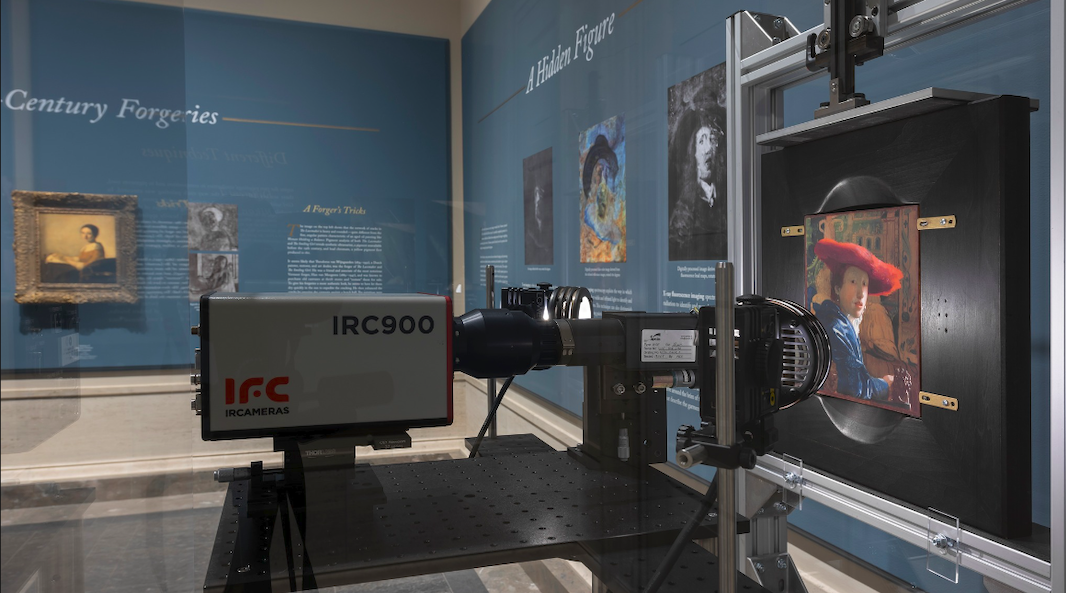
Parmi la trentaine de musées du réseau Smithsonian, laNational Gallery of Artest l’une des plus spectaculaires. Entre les œuvres des peintres les plus célèbres et son tunnel de lumière, ou encore ses grandes salles décorées de fontaines intérieures, le musée est un passage obligé pour tous les amateurs de peinture. Entre le samedi 8 octobre 2022 et le dimanche 8 janvier 2023, l’exposition« Vermeer’s Secrets »réunit une collection unique des 35 peintures de Johannes Vermeer, les seules connues attribuées au mystérieux peintre néerlandais – La National Gallery of art en possède quatre. L’exposition (gratuite) se situe dans l’aile ouest du musée. Ouvert tous les jours de 10am à 5pm.6th St and Constitution Ave NW.
Il n’y a pas mieux pour se fondre dans l’ambiance d’une ville. Envie de voir un match de football américain? LesWashington Commandersjouent dans leur stade en dehors de DC à Landover. Pour se mettre à l’heure d’hiver, rien de tel que d’aller voir un match de hockey avec lesWashington Capitalsdans l’arène de Capital One, située à Chinatown. La troisième option pour se détendre devant un bon match, c’est d’aller regarder les joueurs de la NBA avec lesWizards, toujours dans l’arène de Capital One.
Le Kennedy Center est un endroit magique la nuit : de sa terrace, on y découvre Washington sous un autre angle. Le coucher de soleil sur le Potomac n’enlève rien au charme. Un beau cadre pour aller voir leNational Symphony Orchestrade Washington. Du jeudi 10 au samedi 12 novembre 2022, la célèbre violoniste Anne Akiko Meyers jouera pour la première foisBlue Electra, la nouvelle œuvre du compositeur Michael Daugherty, lauréat d’un Grammy.Billet ici.
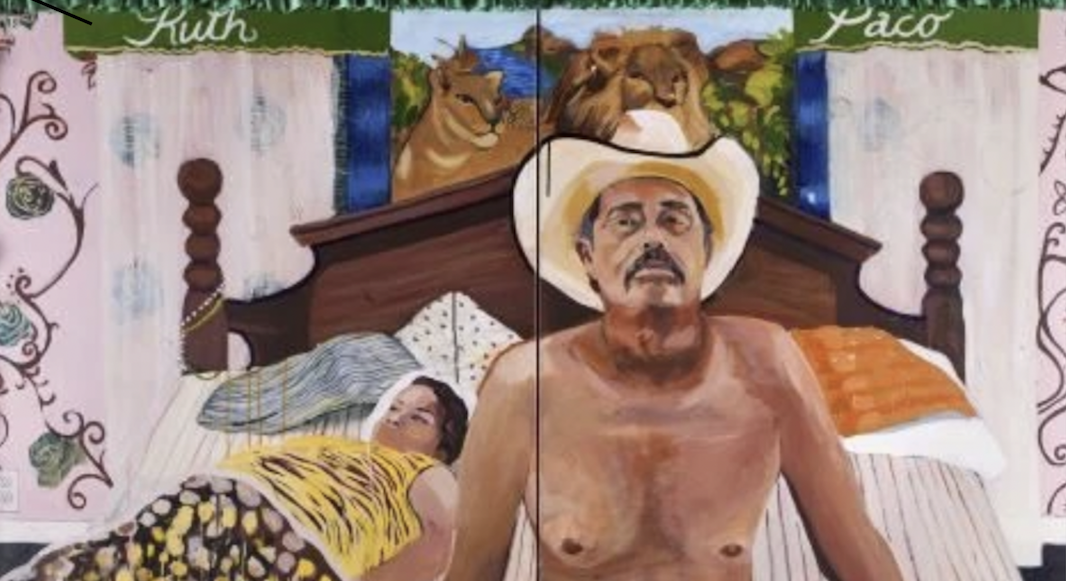
Le National Portrait Gallery est connu pour une série particulière : celle des portraits peints des 45 présidents des États-Unis. Cet automne, une autre exposition vient s’installer dans les murs de cette institution. Du vendredi 28 octobre 2022 au samedi 7 janvier 2023,« Kinship »présente plus de quarante œuvres de huit artistes contemporains dont le travail explore la notion de parenté et de proximité : Njideka Akunyili Crosby, Ruth Leonela Buentello, Jess T. Dugan, LaToya Ruby Frazier, Jessica Todd Harper, Thomas Holton, Sedrick Huckaby et Anna Tsouhlarakis. L’entrée est gratuite. Ouvert tous les jours de 11:30 am à 7 pm.8th and G Streets NW.
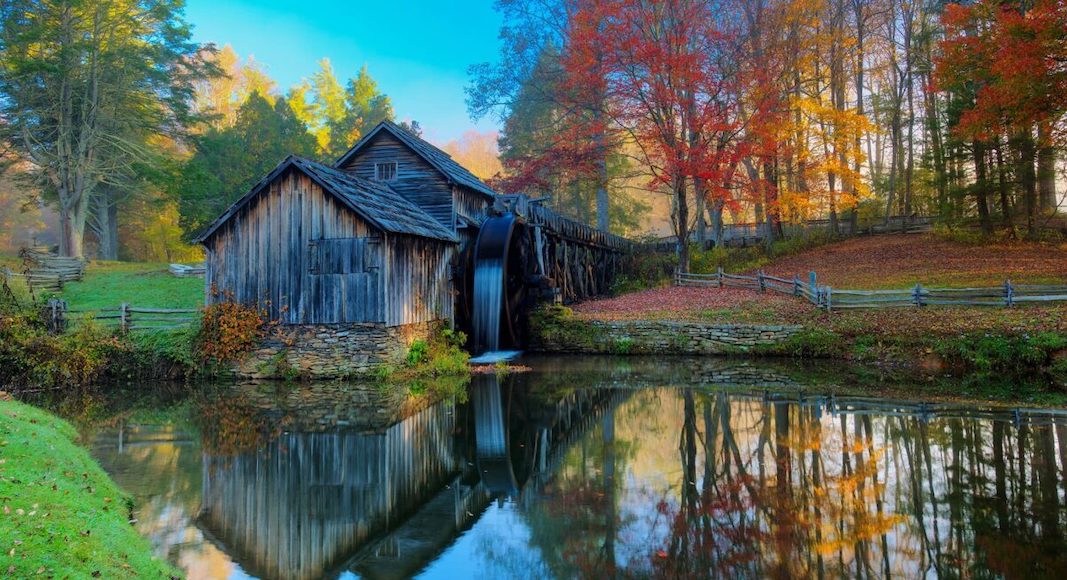
Pour aller voir les plus belles scènes automnales, le fameuxBlue Ridge Parkwayamène ses visiteurs dans les virages de la vallée de Shenandoah. D’octobre à novembre, les amateurs de nature et d’air frais de la montagne s’y rendent pour marcher dans les sentiers de la vallée ou pour passer une nuit dans un chalet et profiter de la beauté de l’automne. À relire également :5 idées de week-end autour de Washingtonpour s’éloigner de la ville et faire l’expérience de la région sous un autre angle.
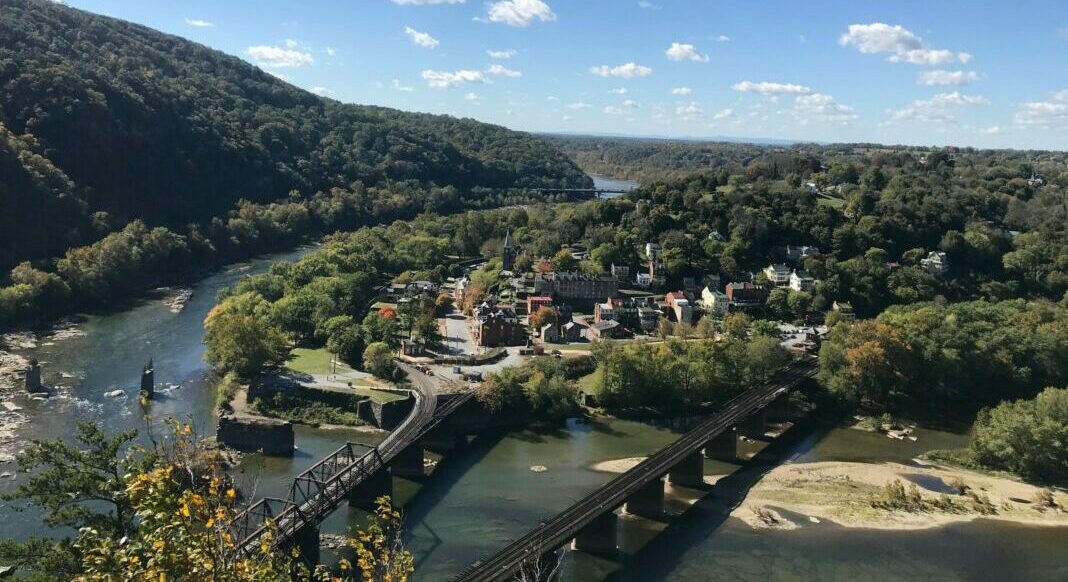
À une heure de Washington DC, en train ou en voiture,Harper’s Ferryest une petite ville historique (et magnifique) coincée entre deux fleuves, le Potomac et le Shenandoah. Officiellement en Virginie-Occidentale, vous serez également à deux pas de la Virginie et du Maryland. Entre balades dans les petites rues ou sur les chemins de la montagne, ce petit village vaut vraiment le détour.
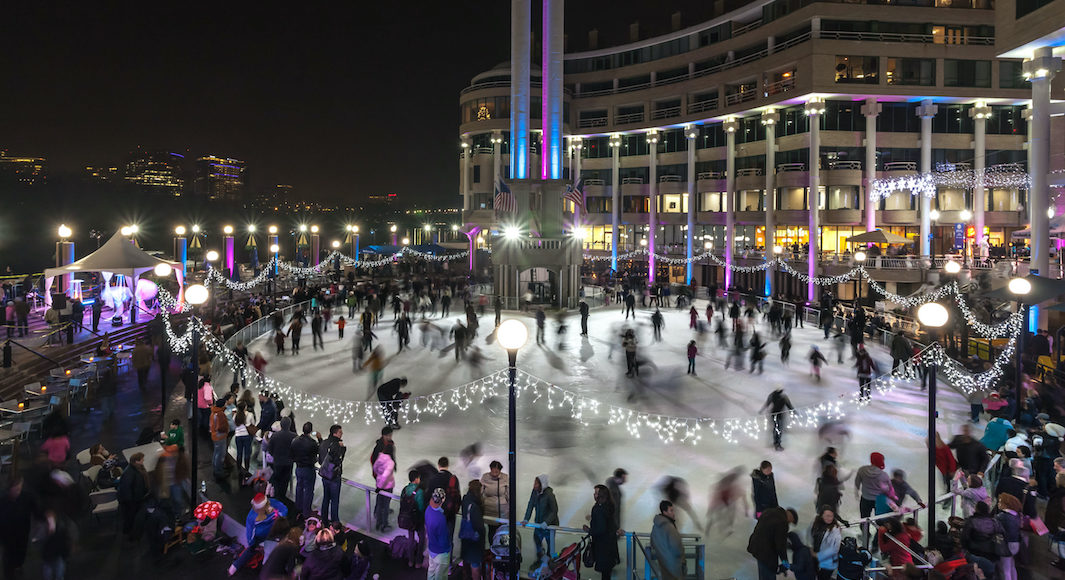
Où glisser sur la glace dans la région de Washington ?
La saison des doudounes et des bonnets approchent à grand pas. De nombreuses patinoires ouvrent leurs portes dès le mois de novembre pour encourager les amoureux de la glisse à profiter des festivités hivernales dans la capitale.
The Washington Harbour Ice Rink
C’est la plus grande patinoire extérieure de DC ! Située dans le quartier de Georgetown, le long du fleuve Potomac, elle ouvrira sa piste à partir de 11am le vendredi 11 novembre. L’entrée coûte 10$ pour les adultes, 9$ pour les enfants de moins de 12 ans et la location de patins à glace est de 6$. Des tarifs de groupe (10 personnes et plus) sont également disponibles. Rendez-vous au 3000 & 3050 K Street NW.Site.
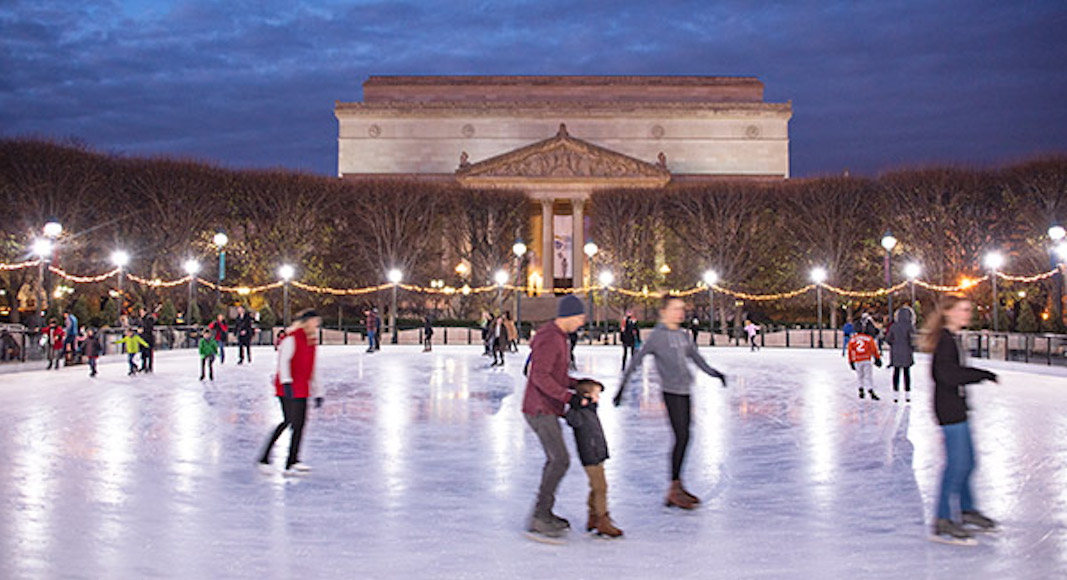
National Gallery and Sculpture Garden Rink
Ouverte à partir du samedi 26 novembre, et ce jusqu’au dimanche 5 mars, cette patinoire en plein air est l’une des plus belles de Washington. Située dans le jardin des sculptures, on peut admirer une œuvre de Miro ou de Calder tout en tournant sur la glace de 11am à 9pm, et jusqu’à 11pm le weekend. La patinoire est très facile d’accès avec l’arrêt de métro National Archives, qui est à quelques pâtés de maison. L’entrée coûte 12$ pour les adultes et 9$ pour les moins de 12 ans et la location de patins est à 6$. Un forfait illimité est également proposé pour 225$ mais n’inclut pas la location de patins. Rendez-vous sur Constitution Avenue entre 3rd et 9th streets, NW.Site
The Wharf
C’est la seule patinoire où l’on peut patiner sur le fleuve ! Elle ouvre ses portes à partir du jeudi 23 novembre à 4pm. L’entrée coûte 12$ pour les adultes ou 9$ pour les moins de 12 ans ainsi que 6$ pour la location de patins. Après l’effort, le réconfort : le quartier du Wharf a son armada de restaurants et de bars qui viennent d’ouvrir ces derniers mois. Rendez-vous au Transit Pier, en face de The Anthem; 960 Wharf Street SW.Site.
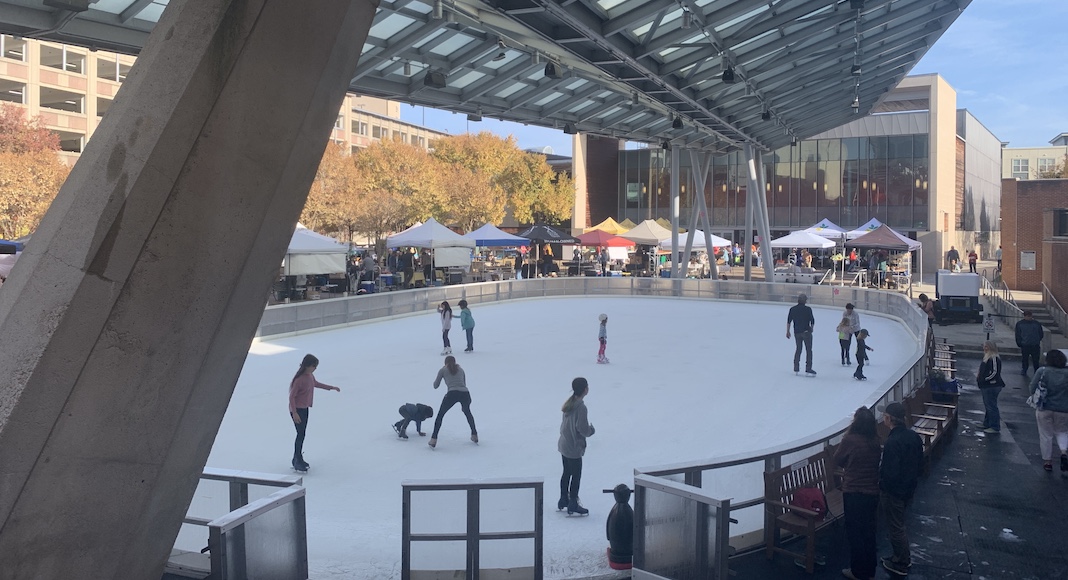
Ouverte depuis fin octobre et ce, jusqu’à mi-mars, cette patinoire est située à Arlington. L’entrée est de 11$ pour les adultes, 10$ pour les enfants et la location de patins à 6$. Pour les plus frileux, la patinoire a une belle cheminée en pierre qui réchaufferont les bouts de pied gelés. Rendez-vous de 12pm à 10pm la semaine, et à partir de 10am le weekend, au 1201 South Joyce Street; Arlington, VA.Site.
Silver Spring Ice Skating
Il y a plus de 400 paires de patins à louer sur cette patinoire extérieure de Silver Spring. La nuit, l’atmosphère est festive avec un arc-en-ciel de lumières éclairant le haut de la patinoire. Ses portes sont ouvertes depuis le 13 octobre. L’entrée est de 11$ pour les adultes et 10$ pour les moins de 12 ans. Comptez 5$ pour la location de patins. Rendez-vous de 12pm à 10pm la semaine, et à partir de 10am le weekend, au 8523 Fenton Street à Silver Spring, MD. Site.
Covid Restrictions Lifting: France’s Reopening Plan
Although we’ve all been waiting impatiently for over a year, it was still a bit surprising to hear Macron finally mention the possibility of France opening its doors to US travelers as soon as June 9th (assuming we don’t have another massive bump in Covid cases over th…
Now that almost all Covid restrictions have been lifted, here’s a selection of summer events taking place in and around Paris this July and August. This list will be updated throughout the summer as new events are announced. Note that many monuments, events, and venues will require a Pass Sanitaire starting July 21st (or other proof of vaccination or Covid test less than two days old).
Major Events
Summer 2021 Festivals Summertime is music festival time! Time Out Paris is a great place to start if you want to see the (somewhat abbreviated) schedule of festivals in and around Paris this summer, in French only: Les Festivals de Musique à Paris
July 3rd – August 29th The festive Fête des Tuileries takes place again this summer with the Ferris wheel, stomach-emptying rides, barbe-à-papa (cotton candy) and whack-a-mole games. Open daily at the Jardin des Tuileries, 11am-midnight (free entry, tickets can be purchased for individual rides). As the fair is in the center of Paris, there’s no loud music or noise effects for the rides that you’d normally expect, preserving a bit of the tranquility of the gardens as well.
July 3-October2nd The magicalCandlelit Eveningsat the Château Vaux-le-Vicomte are back! Open every Saturday from 2pm, candles lit at sunset, and fireworks show before the 11pm closure; reservations required. Due to Covid, the shuttle from the train station is no longer running (reserve a taxi or come by car, free parking). Read the Secrets of Paris article about it here.
Paris Plage! July 10 – August 22 Paris Plage: sandy beaches, palm trees, volleyballs and bikinis — on the Seine! This year it will take place along the Right Bank quays at the foot of the Hôtel de Ville, the Bassin de la Villette for water sports and the three swimming enclosures in the canal, and for the first year in the Jardins du Trocadero (July 17-September 13) with a great view of the Eiffel Tower. As usual, Paris Plages will feature many fun sporting activities (especially in preparation for the 2024 Summer Olympics), water misters, kids activities, ice cream stands, open-air dancing, and even a little Seine-side library. For this year’s edition, you’ll see Covid info tents and a free vaccination center (with or without RDV) in front of the Hôtel de Ville. Free entry, open from 10am (until 6:30pm in central Paris, until 10pm at La Villette or midnight on weekends). Map and more details here.
July 14th – Fête Nationale La Fête Nationale, aka Bastille Day to Americans, is one of the biggest holidays in France. And as Covid restrictions ease, this year there WILL be a parade on the Champs Elysées (you’ll need a Pass Sanitaire and mask to attend) and fireworks at the Eiffel Tower in the evening. Unfortunately this year’s Bals des Pompiers have been canceled again, so no dancing with the firemen, but there are plenty of other fun options: Bastille Day: What to See & Do in Paris
Other Events
July 3 The 17th edition of the Nuit des Musées (Night of the Museums) take place all over Europe. In Paris and the surrounding Ile de France with over 200 participating museums and cultural centers that will be open for free starting at sunset, with a special program of events. Reservations required, check out the offerings on the interactive map here. The big news this year? The Musée de la Chasse et de la Nature is reopening after two years of renovations!
July 4 The 20th annualCarnival Tropical de Paris takes place today at the Étienne Charléty Stadium (13th) starting at 1pm until 6pm, with over 1000 dancers and 15 groups from the l’Île-de-France offering their very creative carnival performances (choreography, costumes and music). “The Royal family, King, Queen, Mini-Queen and Prince elected for 2021, will open the parade after a musical performance performed by the group DOKONON, a Guyanese orchestra well known in Paris during the carnival period with lead singer Hendy Chocho.” Free entry for up to 5000 guests, but advance registration and proof of vaccination or negative Covid test less that 72 hours old required.
July 7 The 108th (!) edition of the Tour de France kicked off from Brest last month and finishes on the Avenue des Champs Elysées today. It will be broadcast live on networks around the world (see “Broadcasters” link on the website), but of course if you’re in France it doesn’t cost anything to set up a chair anywhere along the route to watch the cyclists as they pass by (no word yet on whether access to the Champs Elysées will be limited, but it’s usually so crowded you can’t see anything there anyway unless you got a seat in one of the restaurant upper floors overlooking the avenue).
July 7 – August 26 This year’s monumental open-air sound and light show La Nuit aux Invalides is themed “Napoléon: L’Envol de l’Aigle” (Flight of the Eagle) to celebrate the 200th anniversary of the French Emperor’s death. “Come and spend the Night at Les Invalides and rediscover the parts of the Emperor’s life which forged the “Napoleonic legend”, but also the legacy he has left us. Monster for some, genius for others, Napoleon leaves no one indifferent.” It’s a 360° immersive experience lasting just under an hour. Note that a Pass Sanitaire is required. Tickets are €25.99 for seated VIP spots, €18.99 for standing spots (€15.99 for kids 11-17 years old, €5.99 for kids up to 10 years old). You can add on an English headset to hear the translations for €5.99, and a ticket to visit the Dome for €9.99. If you can’t find a spot on the night you’re looking for, there’s an official ticket reselling platform on their site under the “Repurchase” tab by date (prices are exactly the same).
Through July 11 The “Chopin au Jardin” festival features free Chopin concerts at the Kiosque du Parc Montsouris (14th) every sunday from 5-6pm.
July 16 – August 22 The Parc de la Villette is once again hosting its popular Cinéma en Plein Air open-air screenings every Wednesday through Sunday nights. Totally free (but they may limit the number of people if it gets too crowded on the lawn (Prairie du Triangle, behind the Grande Halle de La Villette, metro Porte de Pantin), so get there from 8pm to claim your spot — picnics allowed. The films start after sunset, so sometime between 9:30pm and 10:30pm. All films are shown in their original language with French subtitles. This year’s selection is a mix of big hits and classics: The Wolf of Wall Street, La Reine Margot, Amadeus, Invictus, Truman Capote, Bonnie et Clyde, Harvey Milk, Frida, and The Queen among others. NOTE: From July 21st a Passe Sanitaire and ID will be required to enter.
Through July 27 The annual summer sales, les soldes, take place this year for just four weeks (shorter than the usual five to help out shopkeepers after Covid shutdown) throughout France, primarily in clothing stores, but pretty much everything is on sale now. They used to be a really big deal, but now there are online sales and other sales throughout the year, it’s not worth lining up and fighting to get the “best deals”.
Through August 26 Bercy Village is hosting another season of free, open-air music performances of many different genres in the Cour St-Emilion starting the 21st for Fête de la Musique, then every Thursday from 6pm.
Through October 3 “Wonderland” is a hybrid open-air event/festival in a disused section of the Petit Ceinture railway on the edge of Paris with food tents with guest chefs, skate ramp, boules court, basketball court, kids’ playground, open-air art installations, yoga sessions, beer garden, wine bar, and cinema nights. Entrance is at 103 Cours de Vincennes, 20th, metro Porte de Vincennes; open Wednesday-Friday 6-11pm, Saturday noon-midnight and Sunday noon-11pm. Entry free until 7pm then €2 (kids free with a parent).
Through September 8 The Paris Jazz Festival takes place every weekend at the Parc Floral in the Bois de Vincennes. “The free festival (you only pay entry to the park, €2.50) makes for a brilliant summer outing: everyone brings picnics and enjoys them in the sunshine amid colored flowers, woodlands and lakes, while listening to some virtuoso jazz – it’s also hugely popular, so get here early.” From 3pm until 7pm, no advance ticket purchase necessary. The schedule can be found on the official website.
Most Tuesdays and Wednesdays The American Library in Paris is hosting free “Evenings with an Author” every Tuesday and Wednesday night at 7:30pm Paris time (CET). This month’s guests include Pulitzer Prize-winning author Viet Thanh Nguyen (June 2nd), food writer Alec Lobrano (June 9th), and The Hudson Review editor Paula Deitz (June 22nd). RSVP required (most are free, €10 donation recommended). See the full schedule here.
A Selection of Museum Expositions
Through July 4th David Bowie fans won’t want to miss Bowie Odyssée, a special exhibition of memorabilia (mostly from a superfan collection), presented at the historic Parisian nightclub, Le Palace (8, rue du Faubourg Montmartre, 9th). Open daily, from noon-9pm (10am -7pm weekends). Tickets €14, reservations necessary.
Through July 18th The Palais Galliera “Musée de la Mode” reopens today with an extension of the exposition “Gabrielle Chanel: Fashion Manifesto” through July 18th. Advance reservations required (ticketing opens May 17th), entrance €14. Closed Mondays.
Through July 18th The haute joaillerieMaison Chaumet is marking the bicentennial of Napoléon’s death with an exposition of jewelry celebrating the romance between the Emporer and his first wife, Joséphine. “Founded in 1780, the history of Maison Chaumet is closely linked to that of the imperial couple, of which it quickly became the official supplier. Empress Joséphine, who was one of the Maison’s first major clients, continues to inspire Chaumet’s creations today. In the heart of the sumptuous mansion at 12 place Vendôme, recently renovated, the exhibition looks back on the history of the legendary couple through more than 150 pieces of jewelry, paintings and other works of art. Historical pieces from Maison Chaumet will be specially unveiled for the occasion, such as the tiara worn by Joséphine during her first official appearance.” Free entry, but reservations required.
Through July 19th The Musée de l’Orangerie reopens with the Magritte/Renoir exposition, “Surrealism in Full Sunlight”: “The first exhibition to show a still largely unknown chapter of Magritte’s work in its entirety, it compares Magritte’s works with those of Auguste Renoir, who inspired him.” Advance ticket purchase is required to visit the museum and the exposition.
Through July 18th There’s a very naughty exhibition commemorating the 250th anniversary of the death of the 18th-century artist, François Boucher, at the Musée Cognac-Jay (in the Marais, 8 rue Elzevir, 3rd), “L’Empire des Sens”: “The XVIIIth century marks the advent of the pleasure of the senses. More than at any other time, Love occupies a dominant place in the arts. Philosophers, men of the theater, novelists and artists, all invest in the theme of amorous passions and carnal desires. “Painter of the Graces”, François Boucher is also the author of secret compositions, with a striking erotic charge. His works celebrate the naked body of the woman who abandons herself, hypnotizes the eyes and awakens the senses.” Entry €8, reservations required. Closed Mondays.
Through August 28 Genocides of the 20th Century (at the Shoah Memorial, 4th). A remarkable if disturbing open-air exhibition documenting genocides of the destruction of the Armenians of the Ottoman Empire, of the Jews of Europe, and of the Tutsi of Rwanda through a rich selection of photographs, archives and exceptional testimonies.
Through August 29 See the work of 40 street artists temporarily displaying their works in an empty postal sorting center in the 10th arrondissement for a show called L’Essentiel. “The subject is that of artistic excellence embodied in the convulsive beauty of the ephemeral; an aesthetic response to the singular and constraining situation that artists have experienced over the past year, relegated to the place of the “non-essential”. Entry by reservation on the website.
Through August 30th Fragiles Colosses (at the Jardin des Plantes. Five monumental works by animal sculptor Michel Bassompierre, one of the most important artists in the field of animal sculpture today. Look for the bears and gorillas in front of the Verniquet amphithéâtre (Rue Cuvier entrance).
Through August 31st The Hyper Festival is a city-wide cultural program which brings together cultural establishments from the City of Paris, the major summer festivals and artistic events taking place daily in public spaces throughout Paris. See the full schedule (in French) here: https://quefaire.paris.fr/hyperfestival
 We just returned from a week at the shore in southwest France, where the beaches are vast, the waves are impressive and the food is fantastic. One of the specialties I most love in that corner of the world is squid grilled with garlic and parsley. The squid are cooked using a method the French call aller-retour, or back and forth, a phrase most commonly seen on round-trip tickets. In culinary usage, the phrase means that the food is placed on an extremely hot grill and cooked very quickly on one side (aller) and then the other (retour).

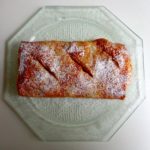 Some days you just need comfort food — so why not make an apple strudel? This delightfully flaky dessert has been popular in France since it was introduced at Versailles by Marie-Antoinette, who came here from her native Austria after marrying the future Louis XVI. It is exceptionally easy to make these days thanks to the availability of filo dough, which eliminates the painstaking step of stretching out kneaded dough until it is paper thin.
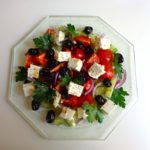 When the weather turns summery, what could be more refreshing than a Greek salad, French style? It’s been so hot here in Paris recently that I’ve made several. All you need is feta, tomatoes, a cucumber, a red onion, some black olives and a little parsley or mint. Unlike the Greek version, salade grecque is generally served in France without sweet peppers or oregano, and with rosé instead of retsina. Call it an Adriatic of the mind.
 You can find quiche lorraine in virtually any bakery or deli in France, but it is even better when made at home. The rich filling of eggs, milk cream, bacon and cheese fluffs up in the oven to marry delightfully with a buttery homemade crust. Served with a crisp white and a salad of tender leaves alongside, it makes a fine lunch dish or a great starter at suppertime. If you cut it into little squares, you can also serve it with drinks at cocktail hour.
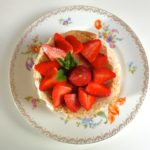 There’s an easy way and a hard way to make the delectable French strawberry dessert known as charlotte aux fraises, as I learned when setting out to make one for this post. A charlotte is an unbaked cake of ladyfingers with a creamy filling. Many modern recipes for strawberry charlotte use a thick dessert cream known as a bavaroise for the filling, and this involves the use of gelatin. As it turns out, that’s the hard way…
 Because the easy way is so easy, the dessert is fun to make. If kids will be sharing it, you can skip the cassis and use strawberry syrup for flavoring the ladyfingers. Once assembled, the charlotte needs to be refrigerated for at least four hours, after which you can decorate it with sliced strawberries and mint. And no, the second time, it didn’t collapse…